
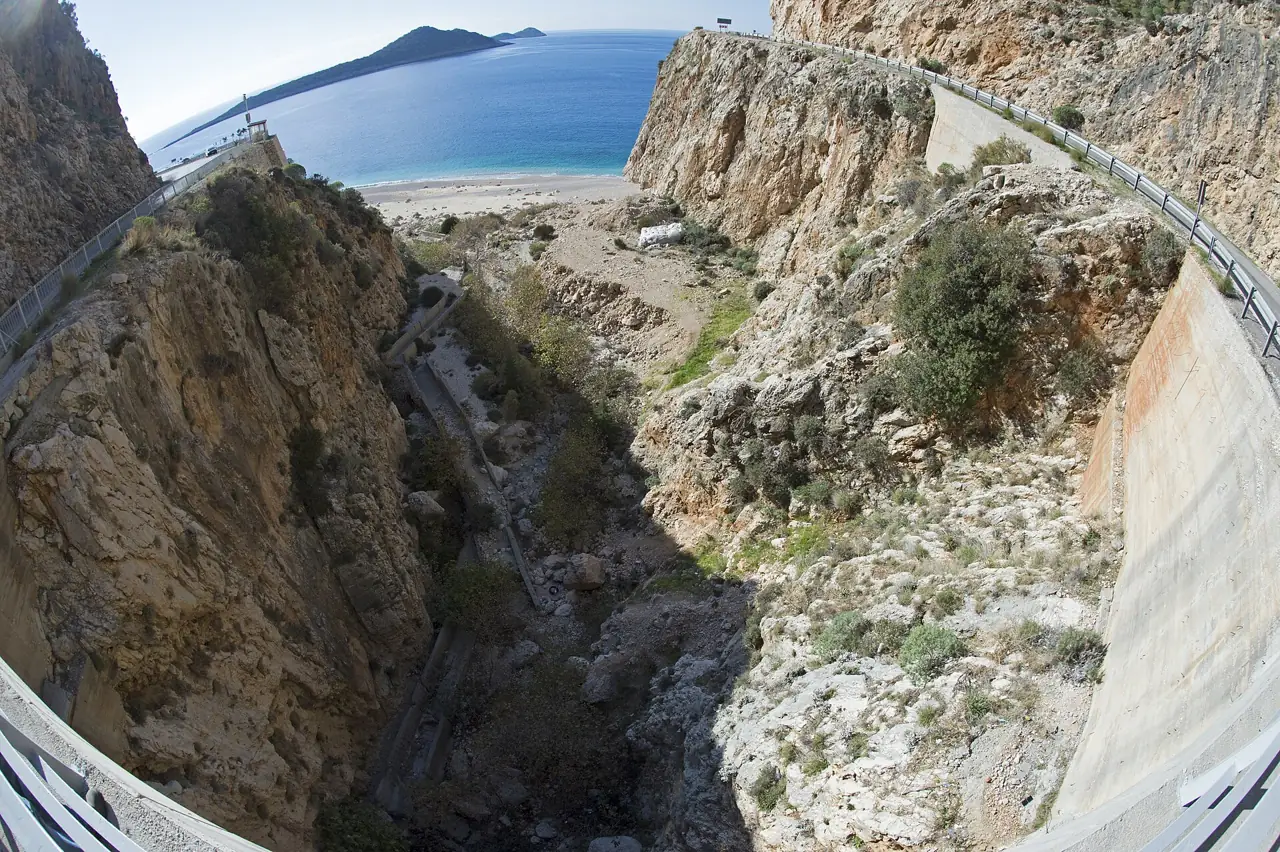
©
Photo: Dosseman, CC BY-SA 4.0, Wikimedia CommonsCar hire and driving in Turkey: a practical guide for the Riviera
A hire car opens up the Lycian coast, the mountain villages and the beaches that buses never reach. It also brings a deposit on your credit card, an insurance excess, toll and fine charges that turn up weeks later, and roads that are very different from the motorways at home. This guide goes beyond the short overview in our getting around guide: what to check before you book, what to look at when you collect the car, how traffic really works on the coast and what to do if something goes wrong. Rules change, so check the current requirements with your rental company and official sources before you travel.
Before you book
Driving licence
Visitors can usually drive in Turkey for a limited period with a licence from an EU country or the UK. For licences from other countries, or ones not written in Latin script, an international driving permit is often required or at least strongly recommended. Rental companies may also have their own rules, so ask the company and check an official source (your foreign ministry's travel advice or the Turkish authorities) before you go.
Most companies want the licence to have been held for a minimum time, often one or two years, and some do not accept temporary or digital-only licences. Take the physical card with you.
Age, credit card and deposit
A minimum age of around 21 is common, with a young driver fee under about 25 and higher age limits for larger or premium cars. The main driver almost always needs a credit card in their own name: the deposit is blocked on it at pick-up and released after return, which can take days or weeks. Many companies do not accept debit cards for the deposit, or only with full insurance.
Ask how large the deposit is before you book; with basic insurance it can be substantial. When the deposit or final bill is charged, pay in lira, not in your home currency; the reasons are in our money guide.
Insurance and the excess
Compulsory third-party insurance (trafik sigortası) is included in every rental. The price you see usually also includes collision damage cover (CDW), but with an excess: the amount you pay yourself if the car is damaged, which can easily be several hundred euros or more. At the desk you will be offered extra cover to reduce it to zero.
Read what is excluded. Tyres, windscreen and glass, the underside of the car, keys and damage on unpaved roads are often not covered by the basic package. An alternative is a separate excess insurance bought before you travel; then the rental company still charges you first and you claim the money back afterwards. Whichever you choose, decide calmly at home, not tired at the counter at midnight.
Airport desk or delivery, and one-way hire
At Antalya and Dalaman you will find desks in or near the terminal, while many local firms meet you in the car park with a sign. Both can work well; check the meeting point, what happens if your flight is late and whether there is an out-of-hours fee. Arrival tips: arriving at Antalya Airport and the region's airports.
Picking up at one airport and returning at another (for example Antalya to Dalaman) is possible with many companies but usually costs a one-way fee. It can still be worth it for a coast road trip; route ideas are in our itinerary guide.
When you collect the car
Photos and video of every scratch
Walk round the car with the agent and make sure every scratch, dent and chip is marked on the damage sheet. Then take your own video of the whole car, including the wheels, the windscreen, the roof, the bumpers from below and the fuel gauge and mileage. Do the same when you return it, ideally with the agent present, and ask for a signed return note. It takes ten minutes and settles most disputes before they start.
Fuel policy and fuel type
Full to full is the fairest policy: you collect the car with a full tank and return it full. With full-to-empty or prepaid fuel you pay the company's price for a whole tank and rarely get a refund for what is left.
Check whether the car takes petrol (benzin) or diesel (motorin or dizel); it is usually written inside the fuel flap. At most stations an attendant fills up for you, so tell them the type and say "full" (or "fulle") or the amount in lira.
HGS sticker, tolls and bridges
Motorways and some bridges and tunnels in Turkey are tolled electronically, without cash booths. Rental cars normally carry an HGS sticker on the windscreen that pays automatically. You do not pay at the time: the company charges the tolls to your card afterwards, sometimes with a small service fee, so ask how it works when you collect the car.
On the coast between Alanya and Fethiye most of the main road is free; tolls matter mainly if you drive to other regions on motorways. Never drive through an electronic toll gate without a working sticker, because penalties for unpaid tolls can be much higher than the toll itself.
Papers and spare wheel
The car's registration document (ruhsat) and the traffic insurance policy should be in the car; check they are there, together with the rental contract and the company's emergency number. Keep your passport and licence with you whenever you drive, because police checks are common.
Look at the tyres, check that there is a spare wheel or repair kit, a jack and a warning triangle, and ask what to do in case of a puncture. Make sure the air conditioning works before you leave the car park: in July you will need it.
On the road
Speed limits, radar and average speed checks
Traffic drives on the right. As a general guide for cars, the limit is about 50 km/h in towns and 90 km/h on most open roads, with higher limits on divided highways and motorways where signed. Limits can change and differ by vehicle type, so always follow the signs.
Fixed speed cameras, mobile radar and average speed checks over longer stretches are common on the D400 and other main roads. Fines go to the car's owner, which means the rental company, and it will pass them on to you. Using a handheld phone while driving is prohibited.
How local traffic works
Driving is more assertive than in northern Europe. The horn often just means "I am here" or "I am overtaking", not anger. Flashing headlights usually mean "I am coming, do not pull out", not an invitation to go. Expect cars to change lanes without much warning and scooters to pass on both sides.
Dolmuş minibuses stop wherever a passenger waves, often suddenly and partly on the road, so keep your distance behind them. At roundabouts and junctions, do not assume that other drivers will give way to you even when the rules say so: watch the signs and traffic lights, and enter slowly.
Alcohol, seat belts and children
There is a legal alcohol limit, but our advice is simple: do not drink at all if you are driving. Penalties are severe, and alcohol cancels insurance cover after an accident.
Seat belts are compulsory in the front and in the back. Small children need a suitable child seat; book it with the car or bring your own, and check it is fitted properly. More safety advice in our health and safety guide.
Roads on the Riviera
The D400 and the coast west of Antalya
Between Alanya, Side and Antalya the D400 is a wide divided road with traffic lights, U-turn points and junctions straight into hotel zones. Watch for pedestrians crossing to the beach and for cars turning in front of you.
From Antalya towards Kemer the road runs through several tunnels: switch on your lights, keep your distance and do not overtake. West of Kemer it climbs into the mountains and becomes a winding road with steep drops all the way to Kaş and Fethiye. It is one of the most beautiful drives in Turkey, but plan more time than the map suggests.
Kaş–Kalkan, Kaputaş and the steep villages
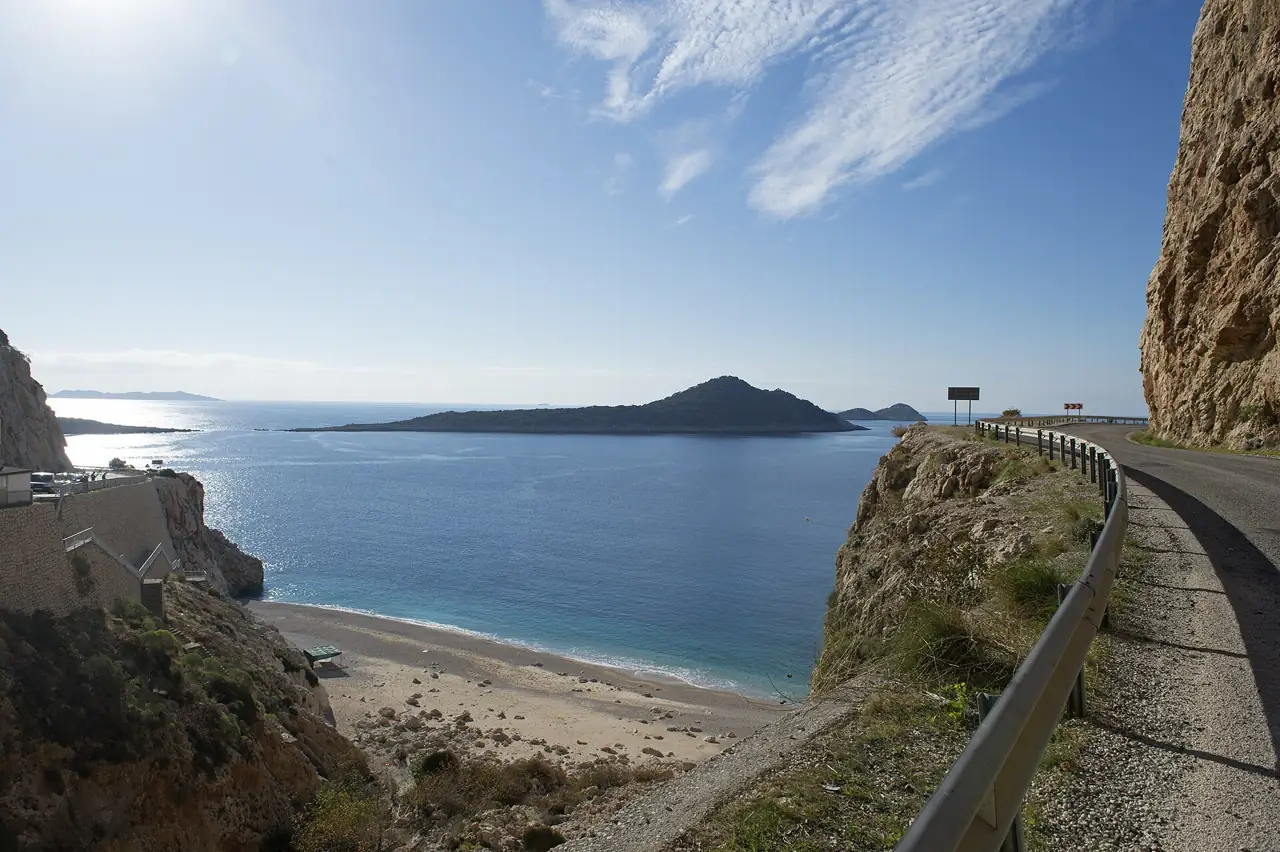
The cliff road between Kaş and Kalkan passes above Kaputaş beach. In summer cars stop along the narrow verge; only park where it is clearly safe, never on a bend, and take care crossing the road to the stairs. Arriving early avoids most of the chaos.
Near Ölüdeniz the roads to Faralya and Kabak are narrow and very steep, with sharp hairpins. Use a low gear downhill instead of riding the brakes, and with a small, underpowered car think twice about going down to Kabak. Some rental contracts exclude unpaved roads, so check before you follow a track to a cove.
Mountain roads, animals and night driving
Inland roads to plateaus, canyons and ancient sites are often narrow, unlit and without barriers. Goats, cows and dogs on the road are normal; slow down on blind bends. Avoid long mountain drives after dark if you can, especially after a day on the beach or a late flight: if you land at night, a transfer to the hotel and a car from the next morning is often the safer choice. See Antalya Airport transfers.
Summer traffic, fuel and parking
In July and August, and on public holidays, the D400 around Antalya, Manavgat and Alanya gets slow, especially in the late afternoon. Leave early for day trips and expect queues near popular beaches.
Fuel stations are frequent on main roads, open long hours and take cards, but fill up before heading into the mountains. Parking in town centres is scarce: use official car parks, keep the ticket from the attendant and do not park where the kerb is painted or where signs show a tow truck, because towing is common. If you pay by card, choose lira on the terminal (why).
Accidents, breakdowns and fines
After an accident
Stop, secure the scene with your hazard lights and warning triangle and, if anyone is hurt, call 112, the single emergency number. Then call the rental company's emergency line straight away and follow its instructions.
For insurance purposes, rental companies usually require an official report from the police in towns or the jandarma (gendarmerie) in rural areas, often together with an alcohol test, even after a minor collision. Without it, the cover may not apply and you could pay the full damage. Do not move the car or sign anything you do not understand before checking with the company.
Breakdowns and punctures
Call the number on your rental contract before arranging any repair yourself; unauthorised repairs may not be refunded. Keep water and a charged phone with you on mountain roads, where mobile reception can be patchy in places.
Traffic fines and toll bills
If police stop you and issue a fine, you will get a written notice; ask how and where to pay. Camera fines and unpaid tolls are sent to the registered owner, the rental company, which charges them to your card, often weeks after your holiday and usually with an admin fee. Keep your rental contract and return note until the deposit is fully released and no more charges are likely.
Car or transfer?
For a beach week in one resort, a hire car is often more hassle than help. A transfer plus a few days of rental in the middle of your stay usually works better. Compare options in our getting around guide and plan routes with the itinerary guide.
Frequently asked questions
Can I drive in Turkey with my UK or EU licence?
Usually yes, for a limited period as a tourist. For licences from other countries, or not in Latin script, an international driving permit is often required. Rental companies can have stricter rules, so confirm with the company and an official source before you travel.
Do I need a credit card to hire a car in Antalya?
In most cases yes: the main driver needs a credit card in their own name for the deposit, which is blocked at pick-up and released after return. Many companies do not accept debit cards, or only with full insurance. Ask before booking and pay in lira, see our money guide.
How do tolls and HGS work with a rental car?
Rental cars usually carry an HGS sticker that pays tolls automatically on motorways and some bridges. The rental company charges the tolls to your card later, sometimes with a service fee. On the coast between Alanya and Fethiye most main roads are toll-free.
What should I do after an accident in a hire car?
Secure the scene, call 112 if anyone is hurt and phone the rental company's emergency line. Companies usually require a police or jandarma report, often with an alcohol test, for the insurance to apply, even for minor damage. Do not sign anything you do not understand.
Is it worth hiring a car for an all-inclusive holiday?
Usually not for the whole stay. You will hardly use it, and parking and the deposit add up. A transfer and two or three days of rental for day trips is often cheaper and easier. Compare in getting around and airport transfers.