
©
Photo: Randam, Public domain, Wikimedia CommonsMoney in Turkey: lira or euro, cards, ATMs and cash
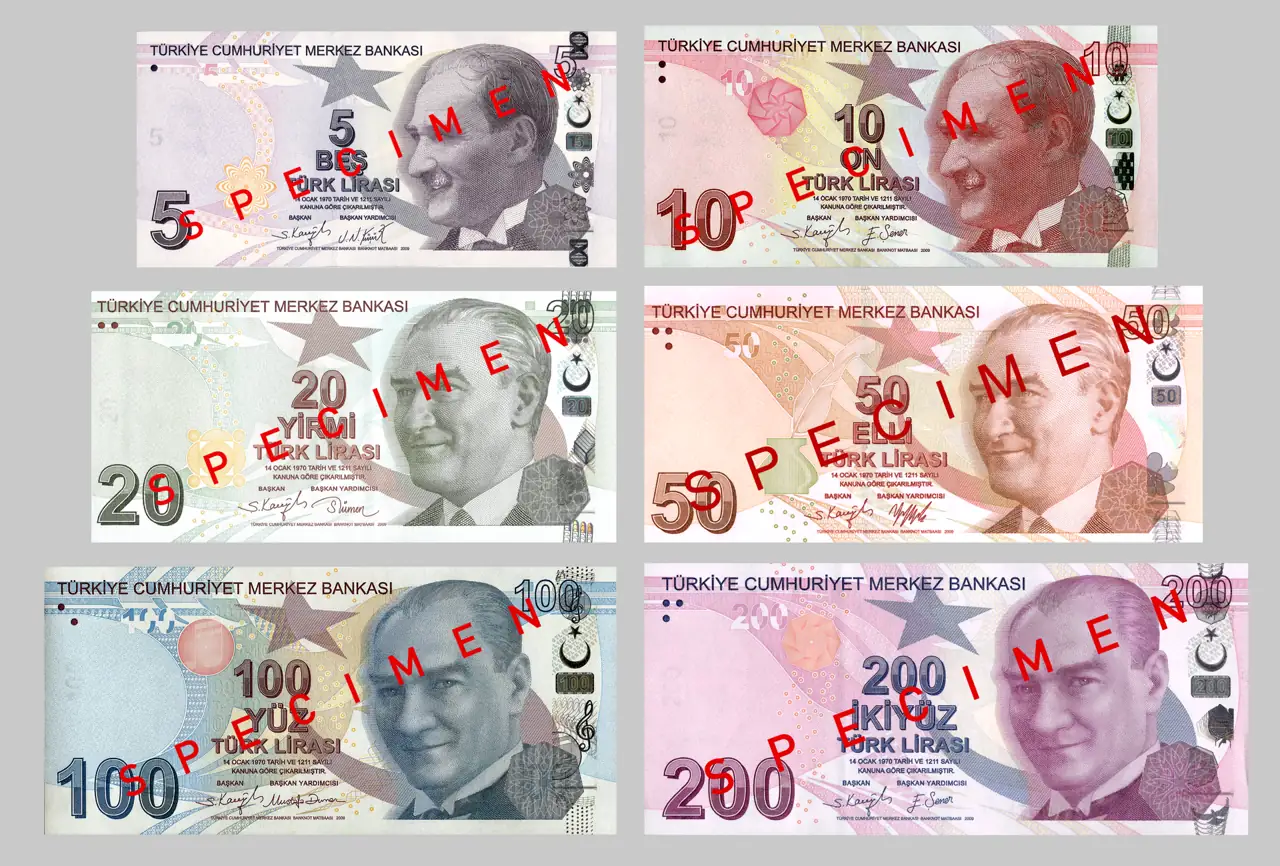
The currency in Turkey is the Turkish lira (TRY, ₺). In the resorts around Antalya and Fethiye you will also see prices in euros and sometimes pounds, and plenty of places will take them. The question is not whether you can pay in euros, but what it costs you. This guide explains when to pay in lira, how to use cards and cash machines without losing money on the conversion, where to change cash and how much of it you actually need.
Lira or euro?
Euros are accepted, at a price
In tourist areas such as Belek, Side, Kemer, Alanya and Ölüdeniz, many hotels, shops, excursion desks and taxis accept euros, and British pounds are often taken too. The catch is the rate: the price in euros is usually worked out at a rounded, unfavourable rate, so the same item tends to cost more than if you paid the lira price.
Paying in lira, by card or in cash, is normally the cheaper option. If a place quotes in euros only, it is fair to ask for the lira price and compare.
Why we don't print an exchange rate
The lira has lost value quickly in recent years, and lira prices change often, sometimes within a season. Any rate we printed here would soon be wrong. Check the current rate on your banking app or a currency converter shortly before and during your trip, and you will be able to spot a bad deal in seconds.
Why some resorts price in euros
Because the lira moves so much, many businesses in the resorts set prices in euros to keep them stable: excursions, boat trips, rental cars, spa treatments and some restaurants. That is fine, but you can still often pay the lira equivalent by card. Shops and restaurants used mostly by locals, as well as supermarkets and markets, price in lira.
Bring a few euros anyway
A small amount of cash in euros or pounds is useful as a back-up and for changing at an exchange office in town. Bring clean, undamaged notes: exchange offices may refuse torn or heavily marked ones.
Cards and contactless
Cards work almost everywhere in the resorts
Visa and Mastercard debit and credit cards are accepted in hotels, restaurants, supermarkets, larger shops and most tourist businesses. Contactless payment by card or phone is common. Other card networks are accepted less widely, so carry a Visa or Mastercard as well. Small cafés, market stalls, some boat operators and some taxis may still prefer cash, so ask before you order or get in.
Always choose lira on the card terminal
This is the single most useful tip on this page. When you pay by foreign card, the terminal or the waiter may offer to charge you in your own currency (euros or pounds) instead of lira. This is called dynamic currency conversion (DCC), and the rate it uses is usually considerably worse than your own bank's.
Always choose lira (TRY). If the terminal shows two amounts, pick the one in lira. If the waiter has already selected euros, you can ask them to cancel and run the payment again in lira. Your bank then converts it at its own rate, which is normally the cheaper option.
Check your own bank's fees
Some cards charge a foreign transaction fee on every payment abroad, others charge nothing. Look this up before you travel; a card without foreign fees can save a noticeable amount over a week. Carry two cards from different banks, kept in different places, in case one is blocked or lost.
Card or cash discount
In some smaller shops, the price for cash is a little lower than for card, because the shop pays card fees. If you are buying something larger, such as a carpet, leather goods or jewellery, it is reasonable to ask whether there is a cash price. Always ask for the price in lira first.
Cash machines and exchange offices
Use bank ATMs
Cash machines (ATMs, in Turkish ATM or bankamatik) are easy to find in airports, towns and resorts. Prefer machines that belong to a bank and are attached to a branch or a shopping centre. Standalone machines from independent operators in tourist streets often charge more, and a machine inside a bank branch is also easier to deal with if it keeps your card.
Turkish banks usually charge their own fee for foreign cards, shown on the screen before you confirm, and your home bank may add another. Fees and the maximum amount per withdrawal vary between banks and change often, so compare on screen; if one machine's fee looks high, cancel and try another bank.
Decline the conversion at the ATM too
Just like the card terminal, a cash machine may offer to charge your account in your home currency with a "guaranteed rate". Decline the conversion and withdraw in lira; your own bank's rate is normally better. The wording differs between machines, so read the screen carefully before you press continue.
Exchange offices: in town, not at the airport
Exchange offices (döviz bürosu) in towns and city centres generally give fair rates for euros and pounds, often without commission; compare the buying rate on the board with your currency app. Exchange desks at airports and in some hotels usually give worse rates, so change only what you need for the first few hours there, if anything. Count your money at the counter and keep the receipt.
Arriving without lira
You do not need to arrive with lira. Withdraw a small amount at a bank ATM in the arrivals hall, or pay the transfer by card or in euros if it was booked that way. Our arrival guide covers the first hour at the airport.
How much cash, tipping and everyday spending
Where you still need cash
Even though cards are common, keep some lira in cash, preferably in small notes, for: the dolmuş minibus and some local buses, weekly markets, small cafés and kiosks, public toilets, beach sunbed rentals in some places, small shops in villages and tips. How to get around by dolmuş and bus is in our getting around guide.
How much to carry
For most people, a modest amount of cash for a day or two is enough, topped up at an ATM as needed. Pay larger amounts, such as excursions, restaurant bills and shopping, by card. Do not carry all your money at once: leave part of it, and a back-up card, in the hotel safe.
Tipping
Tipping is customary but not mandatory. Small notes in lira are easiest; euros are accepted in the resorts. Who usually gets a tip and how much is common is explained in our all-inclusive guide. In restaurants, check the bill first: if a service charge is already included, an extra tip is optional.
Planning your spending
Prices on the coast vary a lot between a beach bar in a big resort and a lunch counter in town. For a rough idea of the total cost of your holiday, try our holiday budget calculator. For the cheapest fruit, vegetables and snacks, visit one of the weekly markets: bring cash in small notes.
Carrying larger amounts of cash
If you plan to bring a large amount of cash into or out of Turkey, customs declaration rules may apply. The limits can change, so check the current rules with official sources, such as Turkish customs or your own country's authorities, before you travel.
Frequently asked questions
Should I use euros or lira in Turkey?
Pay in Turkish lira wherever you can. Euros are accepted in many resort hotels, shops and excursion desks, but usually at a rounded, unfavourable rate. Paying in lira, by card or in cash, is normally cheaper.
Should I pay in my home currency or in lira on a card terminal?
Choose lira (TRY). If the terminal or ATM offers to charge you in euros or pounds, that is dynamic currency conversion, and its rate is usually worse than your bank's. Decline it and pay in lira.
Are cards accepted in Turkey?
Yes, Visa and Mastercard are accepted in hotels, restaurants, supermarkets and most shops in the resorts, and contactless payment is common. Keep some lira in cash for the dolmuş, markets, small cafés and tips.
Where is the best place to change money in Turkey?
Exchange offices (döviz bürosu) in towns usually give fair rates, often without commission. Airport and hotel exchange desks tend to be worse. Withdrawing lira from a bank ATM and declining the conversion offer is often just as good.
Do ATMs in Turkey charge fees for foreign cards?
Most Turkish banks charge a fee for foreign cards, shown on screen before you confirm, and your own bank may add one. Fees vary between banks and change often, so compare on screen and cancel if the fee looks high.