
©
Photo: Tanya Dedyukhina, CC BY 3.0, Wikimedia CommonsHealth and safety on the Turkish Riviera
For most visitors the coast between Antalya and Fethiye is a relaxed, easy place to spend a holiday. The real risks are ordinary ones: too much sun, an upset stomach, a scooter accident, a wallet left on a sunbed or an inflated taxi fare. This page covers what is worth knowing in a calm, practical way: general safety, pharmacies, doctors and insurance, water, food and heat, the usual tricks and short notes for women, LGBT and solo travellers. It is general information, not medical or legal advice. Travel advice also changes, so check your own government's current page before you go; for British travellers that is the UK FCDO travel advice for Turkey.
General safety
A calm coast for most visitors
The resort areas of Antalya, Belek, Side, Alanya, Kemer, Kaş and Fethiye receive millions of visitors every year, and the vast majority have no trouble at all. Serious crime against tourists is rare; what happens more often is small and avoidable. Normal city sense is enough: keep an eye on your things, use official taxis and do not let a holiday mood switch off your judgement.
Situations elsewhere in Turkey or in the wider region can make the news and change official travel advice. Read your government's page for Turkey before you book and again before you travel, rather than relying on old forum posts.
Pickpockets and things left on the beach
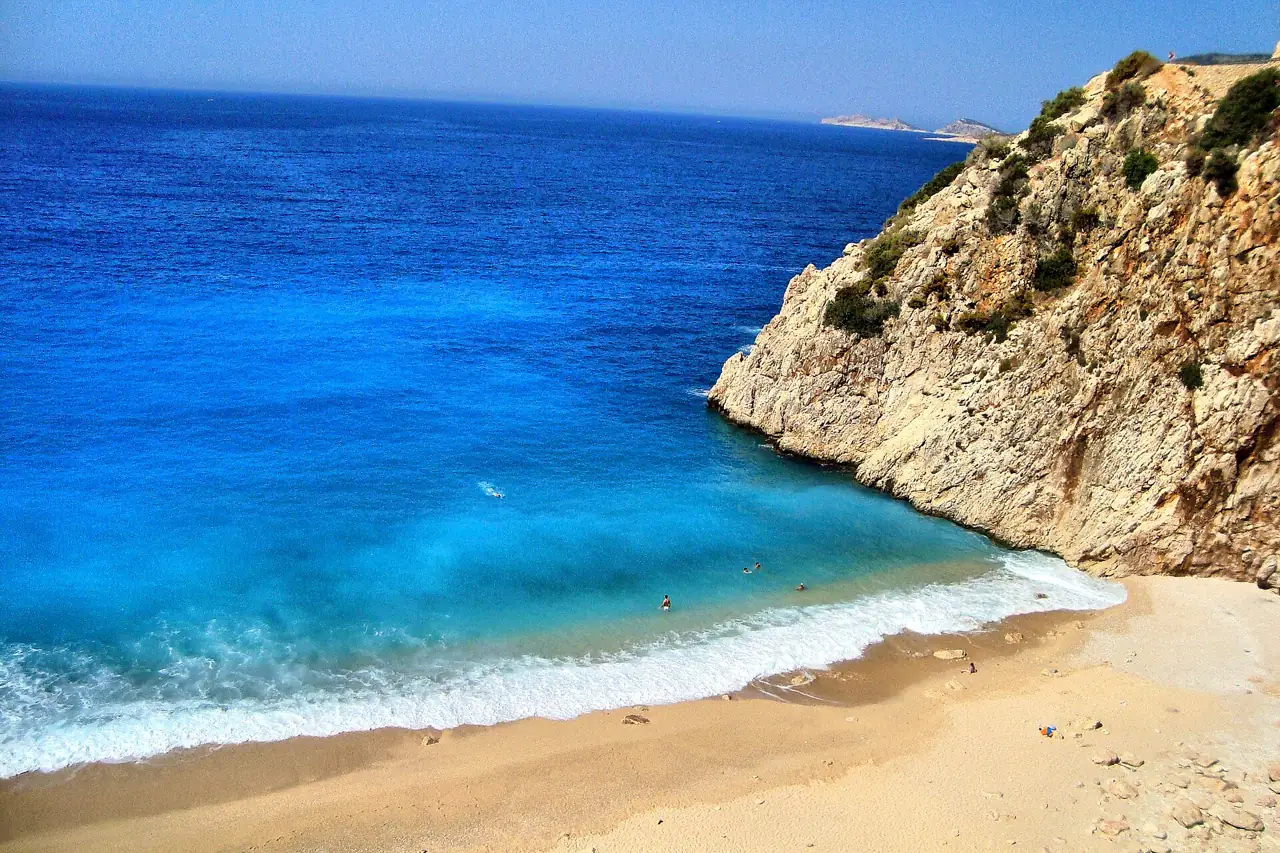
Petty theft is the most common problem: phones, wallets and bags left on a sunbed while everyone is in the water, or a bag hanging on a chair in a busy bar. Take only what you need to the beach, use the hotel safe for passports and spare cards, and keep your phone zipped away in crowded old towns and markets.
If something is stolen, report it to the police (or the tourism police where there is one) and ask for a written report: your insurer will usually want it.
Traffic is the bigger risk
Statistically, traffic is more dangerous than crime. Drivers do not always stop at zebra crossings, scooters appear from unexpected directions and pavements in resort towns can end suddenly. Cross where there are traffic lights if you can, make eye contact with drivers and do not assume a crossing means cars will stop.
If you drive, expect fast overtaking on the coastal road, unlit stretches at night and mountain roads with sharp bends. More on hiring a car and taking taxis in our getting around guide.
Scooters, quads and buggies
Hired scooters, quad bikes and buggy safaris cause a large share of holiday injuries. Wear a helmet, do not ride after drinking and check that your licence covers the vehicle: many travel insurance policies do not pay for accidents on a motorbike or scooter you are not licensed to ride, or without a helmet. Check your policy before you sign anything.
Before taking a hire vehicle, photograph any existing damage and keep the contract. Disputes about scratches at return are common.
Pharmacies, doctors and insurance
Pharmacies (eczane) and the duty pharmacy
Pharmacies are marked with a red E and the word Eczane. Pharmacists are trained and used to helping tourists with sunburn, stomach trouble, insect bites and colds; in resort areas many speak some English or German. For anything beyond a minor complaint, ask a doctor.
Outside opening hours one pharmacy in each district stays open as the nöbetçi eczane (duty pharmacy). Every pharmacy displays the address of tonight's duty pharmacy in its window, and hotel reception can tell you too.
Hotel doctor, private and state hospitals
Many large hotels have a doctor on call or a small medical room. This is convenient, but a visit is often charged, and some hotel doctors refer patients to a particular private clinic. Ask about the cost first and keep every receipt.
The resort towns have both private hospitals (özel hastane), which are used to foreign patients and insurance paperwork, and state hospitals (devlet hastanesi). Private hospitals can be expensive without insurance. If you are insured, call your insurer's emergency line early: they often name a hospital they work with directly, which saves you paying upfront.
Travel health insurance
Turkey is not in the EU, and the European Health Insurance Card (EHIC) and the UK GHIC are generally not valid in Turkey. Treat travel health insurance that includes medical repatriation as essential, and read what it excludes (alcohol, scooters, pre-existing conditions, adventure sports such as paragliding). Check the details with your insurer or official source before you travel, as rules and policies differ.
Bringing medicines
Bring prescription medicines in their original packaging, with a copy of the prescription or a doctor's letter for larger quantities. Rules for some medicines differ from country to country; if in doubt, ask your doctor or pharmacist and check with the Turkish embassy.
Emergency number 112
In Turkey 112 is the single emergency number for ambulance, police and fire. Have your hotel's address ready, or share your location from your phone. For non-urgent help, the hotel reception is usually the quickest first contact.
Water, food, sun and heat
Tap water
Tap water in the resort towns is treated, and you can brush your teeth with it, but most visitors and most locals drink bottled water. Hotels and old buildings often store water in rooftop tanks, so taste and quality vary. Bottled water is cheap and sold everywhere; larger bottles from a supermarket cost much less than small ones from a beach kiosk.
Ice in hotels and restaurants is normally made from filtered water, and washed salads are generally fine. If you have a sensitive stomach, simply be a little more careful in the first days.
Upset stomachs
A day of stomach trouble is common on any long-haul holiday, more often from heat, buffet food that has stood too long, rich food and alcohol than from the water. Choose freshly cooked food, wash your hands before eating and drink plenty. If symptoms are severe, last more than a couple of days or affect a small child or an older person, see a doctor or ask a pharmacist.
Sun, heat and the midday hours
From June to September temperatures on the coast often pass 35 °C and the UV index is very high. Sunburn and heat exhaustion are the most common holiday complaints. Use high-factor sun cream and reapply after swimming, wear a hat, stay in the shade roughly between 12:00 and 16:00 and drink more water than you think you need.
Young children, older travellers and anyone with heart or circulation problems feel the heat most. Plan excursions and ancient sites for the morning or late afternoon. Monthly temperatures are in our weather guide, and tips for children in our family guide.
Mosquitoes and insects
Mosquitoes are a nuisance on summer evenings, especially near rivers and wetlands such as Manavgat, Dalyan and Çıralı. Repellent and a plug-in device for the room help. Jellyfish appear on some days; if you are stung, leave the water and ask the lifeguard or a pharmacist.
Sea conditions, water temperature and swimming tips are in our sea temperature guide. Watch for red flags and currents on open beaches.
Scams and tourist traps
Taxis
Most taxi drivers are honest, but the classic problem exists: the meter is not switched on, a long detour, or a fixed price far above the meter fare. Ask for the meter (taksimetre) or agree the price before you get in, and have small notes. Details in our getting around guide.
Card payments and exchange rates
When a card terminal or ATM offers to charge you in euros or pounds, choose lira instead: the offered conversion rate is usually poor. Check the amount before you enter your PIN and use ATMs of banks rather than standalone machines. More in our money guide.
Factory visits and shopping tours
Cheap or free excursions sometimes include long stops at leather, jewellery or carpet showrooms, where prices are high and the pressure to buy is strong. You are under no obligation to buy anything. See our shopping guide for how to shop calmly.
Fake and unbranded medicines
Some shops in resort areas sell 'medicines', creams or supplements outside pharmacies. Buy medicines only in an eczane, and treat cheap branded perfumes, watches and sunglasses on the street as what they are: copies.
Small tricks
The usual tricks of busy tourist streets exist here too: a shoeshine man who drops his brush so you pick it up and then demands payment for a shine, a 'free' flower or bracelet that is not free, a new friend who takes you to a bar with an unexpected bill. A friendly but firm 'no, thank you' is enough. In the main resorts there are tourism police offices; your hotel can also help if you need to make a complaint.
Women, LGBT and solo travellers
Women travelling alone
Women travelling alone or together are a normal sight in the resort towns, and beachwear, shorts and summer dresses are completely usual there. Expect some chatting-up from shop and restaurant staff in tourist streets; it is usually a sales routine and stops with a clear no. Use the same caution you would at home at night, with drinks and with taxis.
In villages, small inland towns and mosques people dress more conservatively. Covering shoulders and knees there, and a headscarf inside a mosque, is a simple sign of respect.
LGBT travellers
Same-sex partnerships have no legal recognition in Turkey, public LGBT events are often banned and the legal climate has been tightening, so check your government's travel advice for the current situation before you go. Society is more conservative than in western Europe. In international resort hotels and tourist areas couples rarely have problems; many choose to be discreet with public affection, especially outside the resorts. Your government's travel advice has the current situation.
Solo travellers
Travelling alone along the coast is easy: buses and dolmuş minibuses are frequent, hostels and small hotels are welcoming and boat trips are a good way to meet people. Share your plans with someone at home, keep a copy of your passport on your phone and tell your accommodation when you set off on a hike such as the Lycian Way.
Frequently asked questions
Is Antalya safe for tourists?
For most visitors, yes. The resort areas of Antalya and the Turkish Riviera are generally calm, and serious crime against tourists is rare. The common problems are petty theft, traffic, sunburn and taxi or shopping tricks. Check your own government's current travel advice for Turkey before you go, as it can change.
Can you drink the tap water in Antalya?
Tap water is treated and fine for brushing teeth, but most visitors and locals drink bottled water, partly because buildings store water in rooftop tanks. Ice and washed salads in hotels and restaurants are generally fine.
Does the EHIC or GHIC work in Turkey?
Generally no: Turkey is not in the EU and the EHIC and UK GHIC are normally not accepted there. Take out travel health insurance that covers treatment and medical repatriation, and confirm the details with your insurer before you travel.
How do I find an open pharmacy at night?
Look for the duty pharmacy (nöbetçi eczane). Every pharmacy shows the address of the one open tonight in its window, and your hotel reception can tell you. For an emergency call 112.
What is the emergency number in Turkey?
112 is the single emergency number for ambulance, police and fire. If you have travel insurance, also call your insurer's emergency line as soon as possible.