
©
Photo: ahenobarbus, CC BY 2.0, Wikimedia CommonsGetting around the Turkish Riviera: dolmuş, bus, taxi and car
You do not need a car to enjoy the Turkish Riviera. Minibuses run up and down the coast road every few minutes in summer, comfortable coaches link the bigger towns, taxis are everywhere and in Fethiye or Kaş a boat is often the nicest way to reach the next beach. A hire car comes into its own on the Lycian coast and for day trips into the mountains. This guide explains how each option works, what to expect and when it is worth paying for a private transfer instead.
Dolmuş minibuses
How the dolmuş works
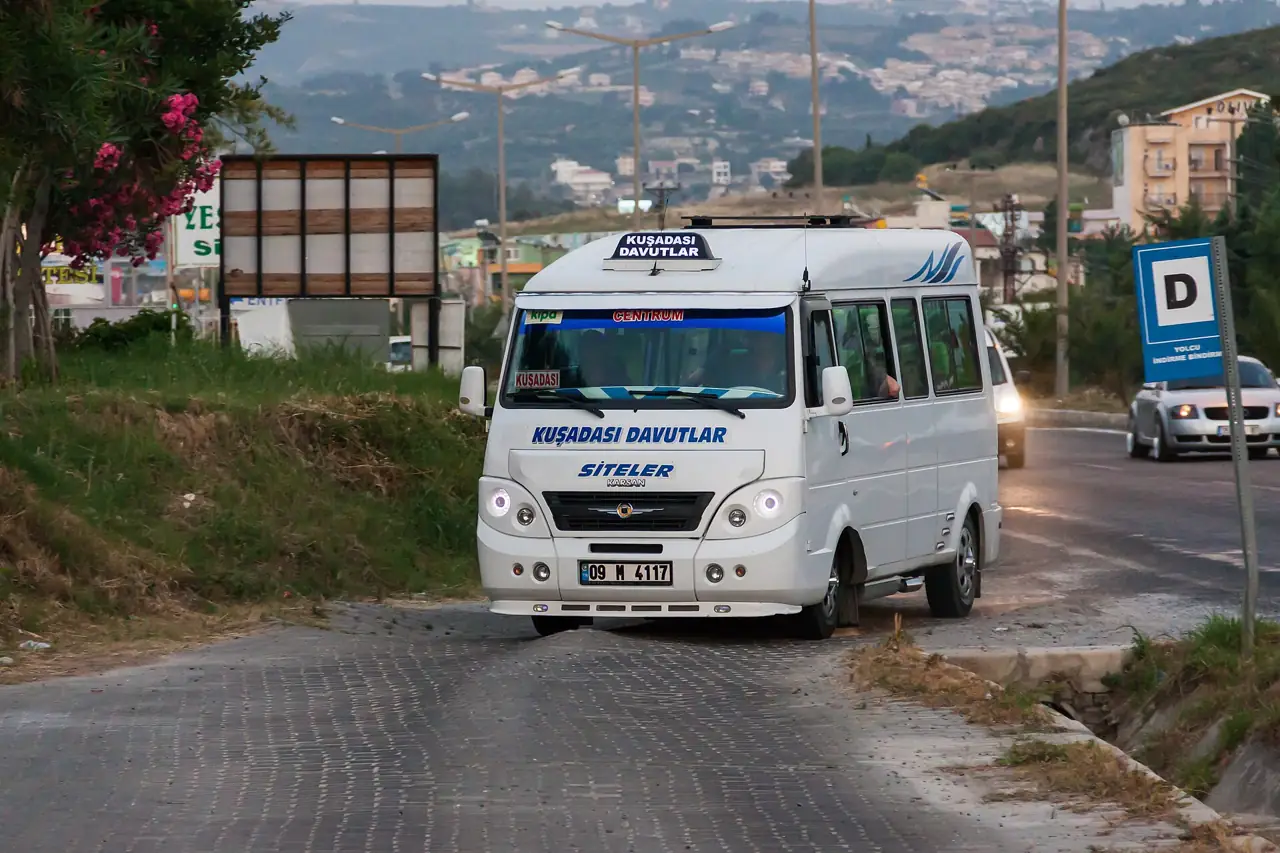
The dolmuş (literally "filled") is a shared minibus that runs a fixed route with a destination sign in the windscreen. You can wait at a stop or simply wave one down at the roadside; it stops wherever it is safe. Pay the driver in cash when you get on, or pass the money forward if the bus is full, and say where you are going. Fares are low and depend on distance; small notes and coins make life easier.
To get off, tell the driver your stop when you board or call out "inecek var" (someone getting off) a little before. In summer the minibuses along the D400 coast road run very often, from early morning until late evening; in winter there are fewer departures, the last one leaves earlier and some resort routes stop altogether. Times change by season, so check locally at your hotel or at the stop.
Useful routes
A few examples of what the dolmuş network covers: Side–Manavgat, with minibuses linking the old town, the hotel strip and Manavgat's bus station; the Kemer coast, where minibuses run between Kemer, Göynük, Beldibi, Çamyuva and Tekirova; Alanya–Mahmutlar and Alanya–Oba, with frequent buses through Alanya's eastern suburbs; and Fethiye–Çalış–Hisarönü–Ölüdeniz, where minibuses from Fethiye centre climb to Hisarönü and drop down to the lagoon at Ölüdeniz.
Further west, the minibus between Kaş and Kalkan is a classic: it stops on request above Kaputaş beach, so you can spend the day on the sand and wave one down for the ride back. On the Lycian coast routes are less frequent than around Antalya or Alanya, so ask about the last return. More beach and village ideas: Kaş guide, Fethiye guide and day trips.
City buses and the tram in Antalya
AntalyaKart: one card for buses and trams
Antalya's city buses and trams do not take cash. You pay with an AntalyaKart, a rechargeable transport card sold and topped up at kiosks, ticket machines and some shops near the main stops. Several people can travel on one card, one after another. On some lines you can also tap a contactless bank card at the reader; whether this works for you depends on the line and your card, so check before you rely on it.
Other towns have their own systems: Alanya's municipal buses, for example, use their own card, while the dolmuş minibuses everywhere still take cash.
AntRay tram and the nostalgic tram
The modern AntRay light rail has several lines through Antalya. One links the city centre with the main bus station (otogar) in the north; another runs east from the bus station past the airport area towards the Expo park. The airport stop is on the main road, not at the terminal doors, so with luggage a taxi or the airport bus is usually easier. Check the current routes before you travel.
The nostalgic tram is the pleasant one for visitors: a single line of old-style carriages running along the cliff road between the Antalya Museum, Konyaaltı and the edge of the old town, Kaleiçi. It is a cheap and easy way to reach the museum or the beach promenade. More in our Antalya city guide.
Airport buses
Havaş airport buses connect Antalya Airport with the city centre and the bus station, and on some routes with larger towns. At Dalaman, Havaş buses run towards Fethiye and other towns, mostly timed to flights. They are cheap and comfortable but stop at fixed points, not at hotels. Routes and timetables change with the season; check the current ones and compare with a door-to-door transfer: Antalya Airport transfers, Dalaman Airport transfers, Gazipaşa Airport transfers.
Intercity buses
How the otogar system works
Every town of any size has an otogar, a bus station where many companies sell tickets from their own desks. Antalya's large otogar is on the northern edge of the city (linked to the centre by tram), and Alanya and Fethiye each have a busy otogar close to town. Smaller places such as Kaş, Kalkan or Side are served by minibuses or by coaches calling at a roadside stop.
Long-distance coaches are modern and comfortable, with reserved seats, air conditioning and usually a steward who brings water and tea. You can book online or at the desks in the otogar; in high season and on public holidays, buy a day or two ahead. Free shuttle minibuses (servis) often take passengers between the otogar and the town centre.
Typical journeys
Journey times depend on the route and the stops, so treat these as rough guides: Antalya–Alanya about 2½ to 3 hours, Antalya–Kaş about 3½ to 4 hours along the coast, Antalya–Fethiye about 4 hours or more, depending on whether the bus takes the inland road or the coast. The coast road west of Antalya is beautiful but winding; if you get car sick, sit near the front.
Taxis
Official taxis and the meter
Official taxis are yellow, have a roof sign and wait at taxi ranks (taksi durağı) in every town and resort. They must use the meter: if the driver does not start it, ask for the taksimetre before you set off. Some cities apply a higher night rate; the rules differ from place to place, so check the tariff card or ask. Small notes help, and card payment is not always possible.
For short trips the meter is fair. For long rides, such as a resort-to-airport run or a full-day trip, agree a fixed price with the driver before you get in, and say clearly whether it covers waiting time and the return. Your hotel reception can call a taxi and confirm the usual price.
Apps
Ride-hailing and taxi apps exist in the big cities, often booking regular yellow taxis rather than private cars. On the coast, though, the taxi rank and the phone number of the local taxi stand are still the norm. Check what works where you are staying.
Hiring a car
Rules and roads
Traffic drives on the right. Tourists can usually drive with a licence from an EU country or the UK for a limited period, and an international driving permit is useful for other licences; check the current rules and your rental company's conditions. You need a credit card for the deposit and should carry your passport, licence and the rental papers.
The main road is the D400, which follows the coast from Alanya through Side and Antalya and on to Kemer and the Lycian coast. East of Antalya it is a wide divided highway; west of Kemer it becomes a winding mountain road with steep drops and tight bends, slow but spectacular. Speed cameras and police checks are common, so keep to the posted limits. Petrol stations are plentiful on the main roads, with staff filling up for you; in the mountains fill up before you set off.
Parking and driving in town
Parking is the hard part. Old towns such as Kaleiçi, Side and the centre of Kaş have narrow lanes, pedestrian zones and few spaces; use the paid car parks at the edge and walk in. In summer resort traffic can be slow in the evenings, and drivers are more assertive than in northern Europe: expect sudden lane changes, scooters and minibuses stopping anywhere.
When a car is worth it
A car pays off on the Lycian coast (Kaş, Kalkan, Olympos, Demre), where beaches, ruins and villages are spread out and buses are infrequent, and for day trips into the Taurus Mountains, to canyons or to ancient sites inland. A few days of rental in the middle of a stay is often enough.
For an all-inclusive beach week in Belek, Side, Lara or Alanya it is usually not worth it: you will hardly use it, hotel parking is limited or costs extra, and a transfer plus the odd taxi or excursion costs less. To compare the costs, try our holiday budget calculator.
Water taxis and ferries
Çalış to Fethiye by water taxi
In season a water taxi shuttles between Çalış Beach and Fethiye harbour, a short, relaxed crossing that beats the road and gives you a view of the bay. It runs regularly during the day; times change with the season, so check the board at the jetty. More in our Çalış guide.
Kaş to Meis (Kastellorizo)
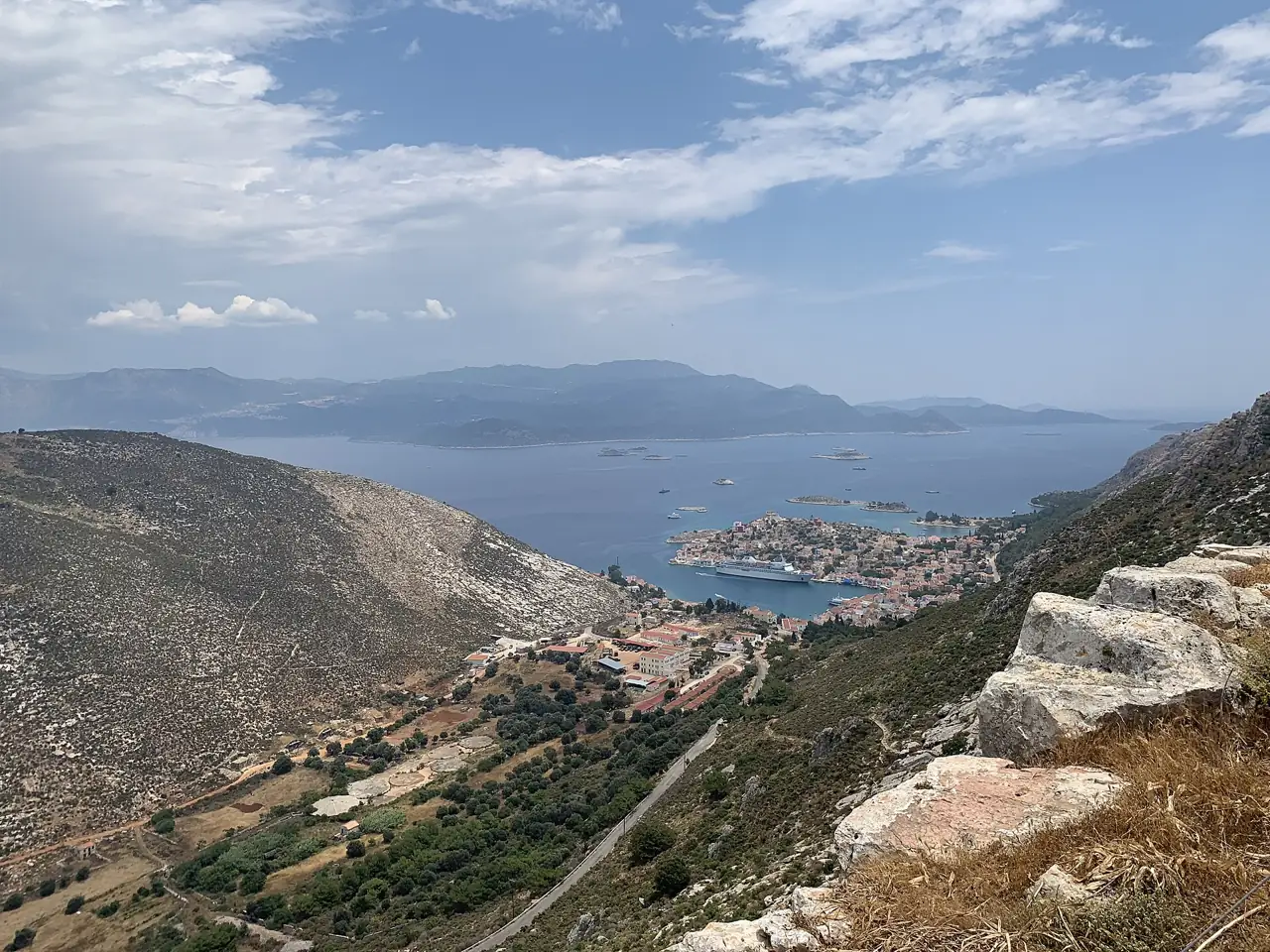
From Kaş harbour a short ferry crosses to the Greek island of Meis (Kastellorizo), just off the coast. Because you leave Turkey and enter the EU, you need your passport, and depending on your nationality a visa or entry permit may be needed; check the current rules before you go. Day trips are popular, so book ahead in summer.
Boats along the coast
Along the Ölüdeniz coast, boats run from the beach to Butterfly Valley and other coves that are hard or impossible to reach by road. From Fethiye, Kaş, Kemer, Side and Alanya, day boats sail to bays and islands; they are excursions rather than transport, but often the easiest way to see the coast. Ideas: day trips.
Frequently asked questions
Do I need a car on the Turkish Riviera?
Not for a beach holiday. Between Antalya, Side, Alanya and Kemer, dolmuş minibuses, buses and taxis cover almost everything, and the resort areas are walkable. A car is worth it on the Lycian coast (Kaş, Kalkan, Olympos) and for day trips into the mountains, where buses are infrequent. See our Kaş guide.
How do I pay on the dolmuş?
In cash, directly to the driver when you get on. If the minibus is full, pass the money forward and the change comes back the same way. Tell the driver where you are going; fares depend on distance and are low. City buses and trams in Antalya are different: there you need an AntalyaKart.
Is Uber available on the Turkish Riviera?
Ride-hailing apps exist in some Turkish cities, often booking regular yellow taxis, but on the coast taxis from the local rank are the norm. Check what works where you are staying, and for long rides agree a fixed price before you set off.
Can I take the bus from Antalya Airport to the resorts?
Partly. Havaş airport buses run to Antalya city centre and the bus station, and on some routes to larger towns; from the bus station, coaches and minibuses continue along the coast. With luggage, children or a late arrival, a door-to-door transfer is usually easier. See Antalya Airport transfers.
Is driving in Turkey safe?
Yes, on the whole, if you drive defensively. The main coast road is in good condition, but local drivers can be assertive, the mountain roads west of Antalya are winding and speed cameras are common. Avoid driving tired at night on mountain roads, keep to the limits and never drink and drive.