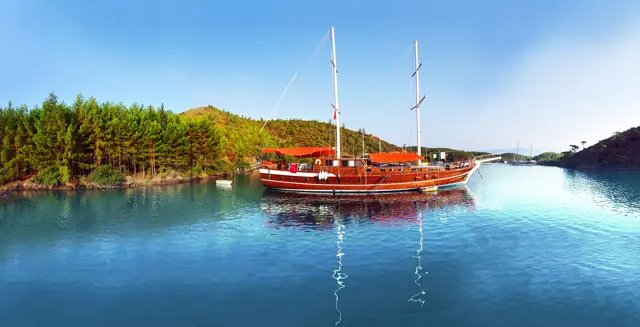
©
Photo: Bilgegezgintr, CC BY-SA 4.0, Wikimedia CommonsAdrasan: a sheltered bay south of Olympos
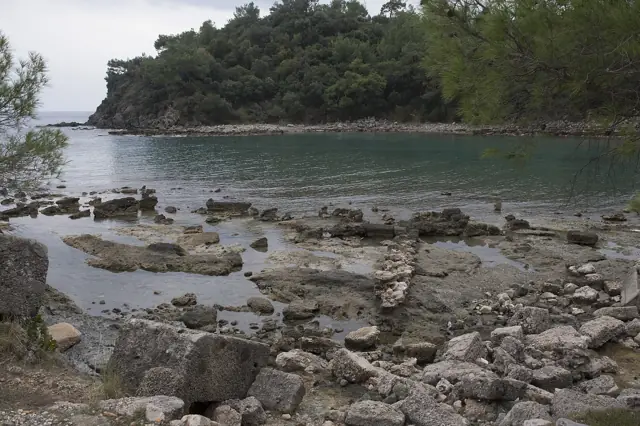
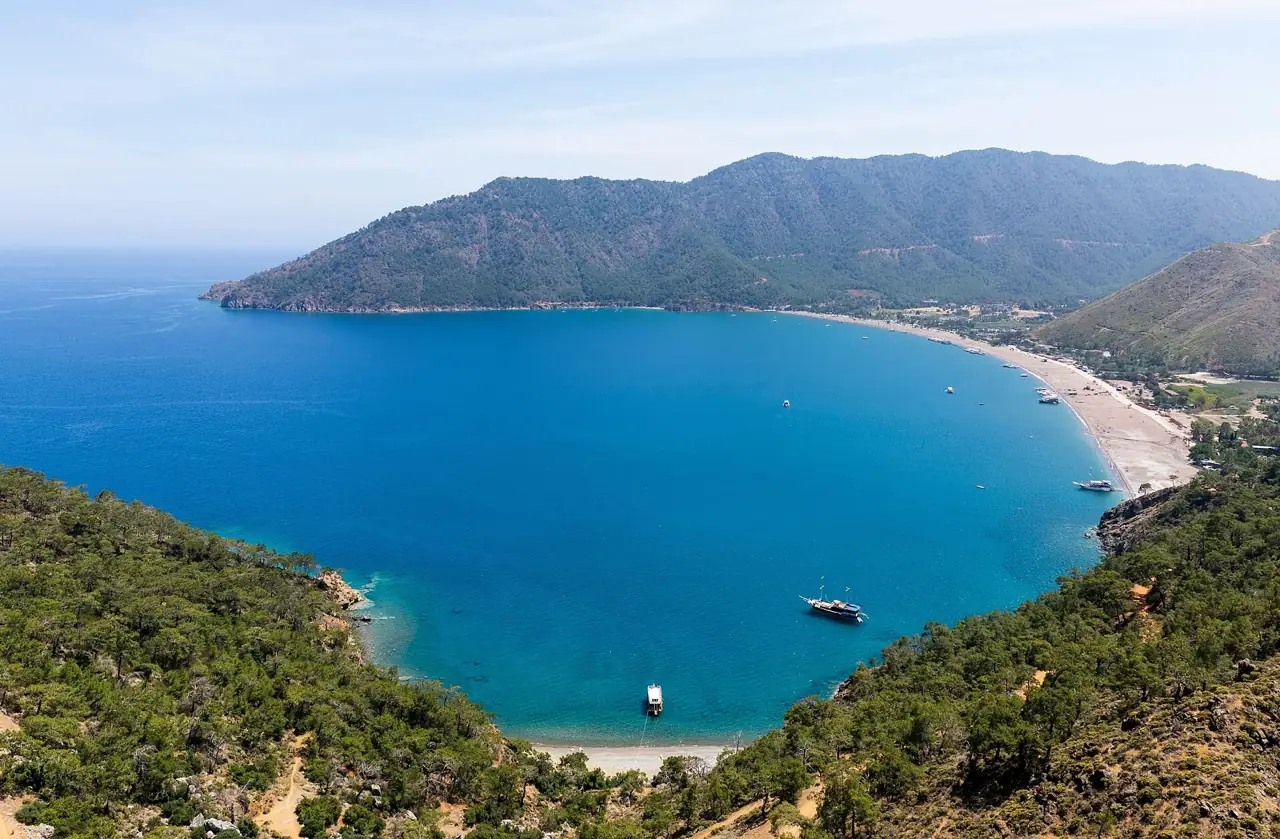
Adrasan sits in a bay ringed by pine-covered mountains, the next cove south of Olympos and Çıralı. There is a long pebble-and-sand beach, a handful of family pensions and small hotels, fish restaurants along the stream, and boats that leave each morning for Suluada. No large resorts, no clubs, no shopping street: people come here to swim in calm water, walk a stretch of the Lycian Way and go to bed early.
Adrasan and the coast around it
Adrasan itself is small: one bay, one road behind the beach. The table compares it with the neighbouring stretches of this coast, with driving times from Antalya Airport.
| Area | Character | Beach | Best for | From AYT |
|---|---|---|---|---|
| Adrasan bay | Family pensions and small hotels, fish restaurants by the stream, boat jetty; quiet after dinner | About 2 km of pebble and coarse sand, sheltered and usually calm | Couples, families, walkers, boat trips | 1 h 50 min |
| Olympos & Çıralı | Tree-house camps, ruins in the forest, the Chimaera flames, village pensions in orange groves | Long natural pebble beach, turtle nesting area | Nature, ruins, simple budget stays | 1 h 35 min |
| Kemer side | A proper resort town: hotels of every size, marina, bars, shops and excursion desks | Pebble beaches with sunbeds, clear water that deepens quickly | All-inclusive holidays, nightlife, choice of day trips | 1 h |
| Finike side | A working town among orange groves, with a marina and a long open coastline | Long pebble and shingle beaches, less sheltered from the wind | Low prices, local life, touring ancient Lycia | 2 h 5 min |
Times are from Antalya Airport (AYT), about 110 km to Adrasan (Antalya Airport to Adrasan). There is no direct airport bus; almost everyone arrives by car or pre-booked transfer.
The bay and the beach
The beach
The beach curves for roughly two kilometres between two headlands. It is pebble and coarse sand rather than fine sand, and in places the shelf drops away soon after the water's edge, so water shoes are useful and small children need watching. Sunbeds belong to the hotels and beach restaurants set back behind the shore.
Why the water is usually calm
Mountains close in on both sides of the bay, which shelters it from the afternoon wind that picks up further north along the coast. The sea here is normally flat and very clear, which is why kayaks, paddleboards and dive boats all work from Adrasan. On a windy day the open southern end of the bay feels it first.
The stream, the shade and the village
A stream reaches the sea at one end of the bay, and pines and eucalyptus grow right behind the sand, so you can find real shade without renting a sunbed. Inland the village is agricultural: greenhouses, citrus trees and a single winding road down to the water. There is a small shop or two, a cash machine and a pharmacy, but stock up on anything particular before you come.
Things to do
Suluada boat trips
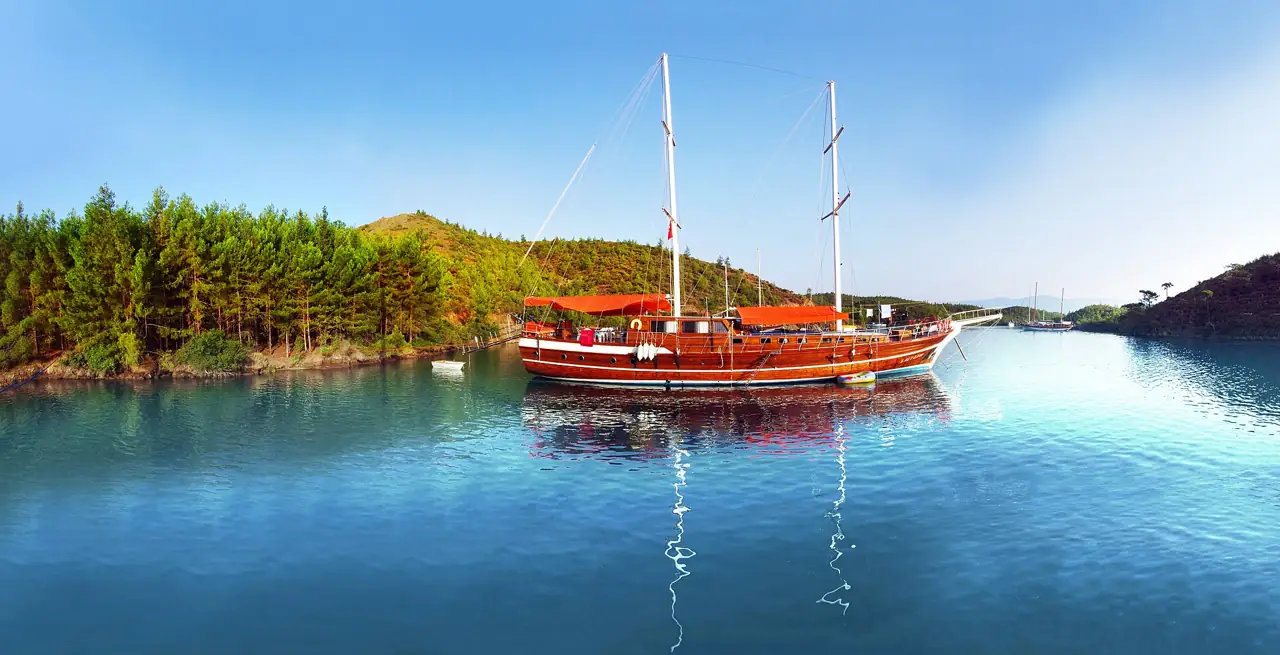
Adrasan is the departure point for boats to Suluada, an uninhabited island with white sand and bright turquoise water, about an hour away. Trips are full days with several swim stops and lunch on board. Book at the jetty a day ahead, ask how many passengers the boat takes and whether it goes to the island itself or only anchors offshore; smaller boats are quieter but move more in a swell. More in our boat trips guide.
Gelidonya lighthouse and the Lycian Way
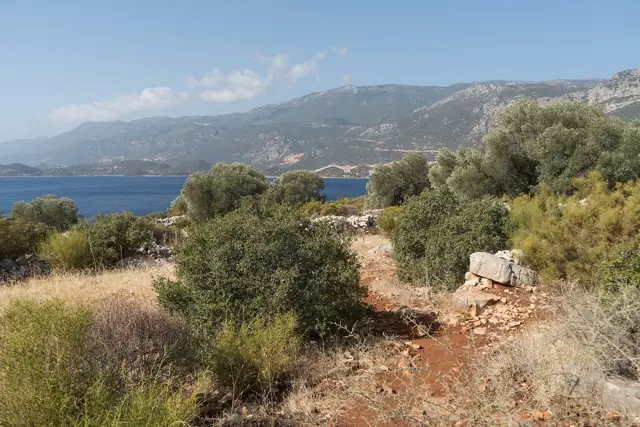
The Lycian Way runs through Adrasan and climbs south over a pass towards Karaöz and Cape Gelidonya, where a lighthouse looks out over five small islands. Walking the whole way from the bay is a long day on a rough, exposed path; many visitors drive to Karaöz and walk only the final stretch to the cape. Take water, a hat and proper shoes, and avoid the middle of the day in summer. North of the bay the same trail climbs over the hill towards Olympos.
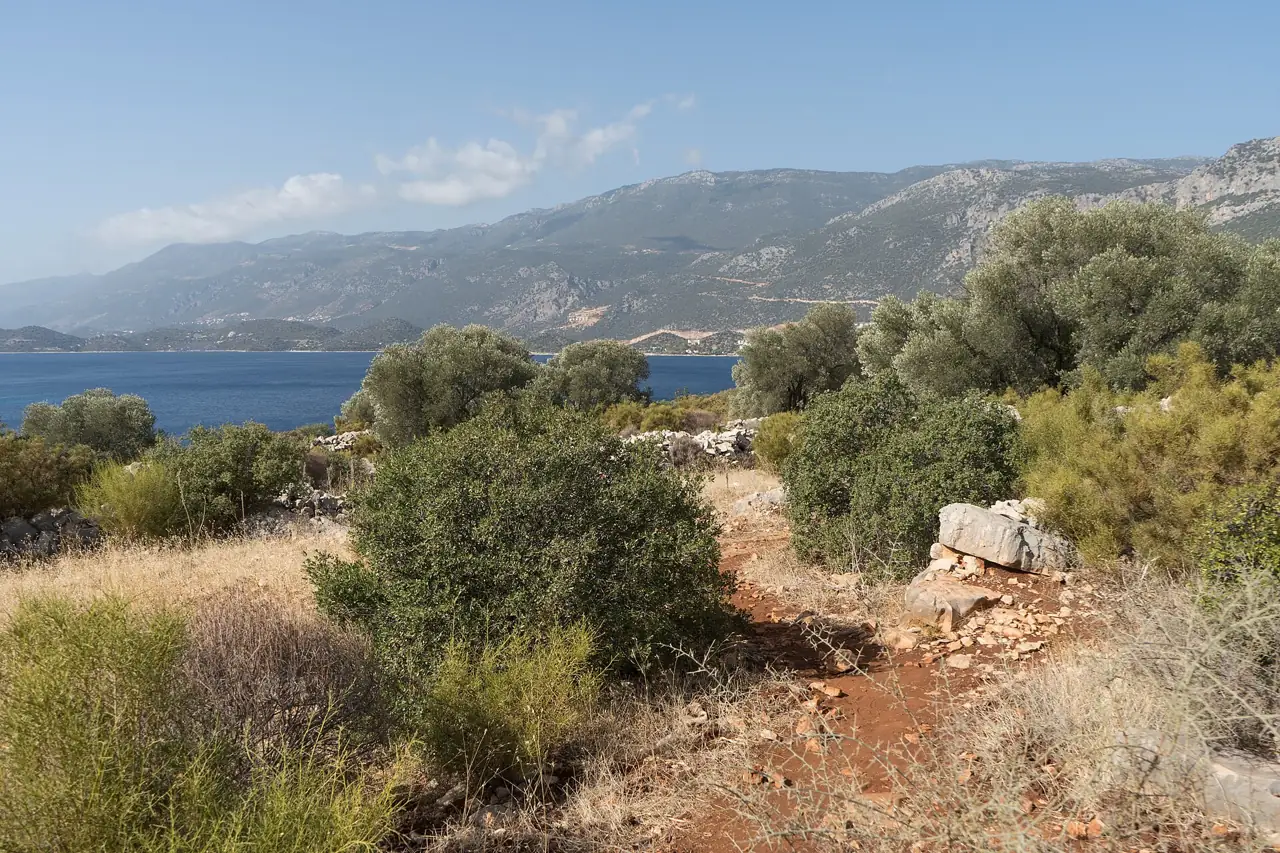
Olympos, Çıralı and the Chimaera
The ruins of Olympos, the protected turtle beach at Çıralı and the Chimaera flames burning on the hillside are 20 to 30 minutes away over the hill: an easy half day from Adrasan, best started late in the afternoon so you reach the flames after dark. See the Olympos and Çıralı guide.
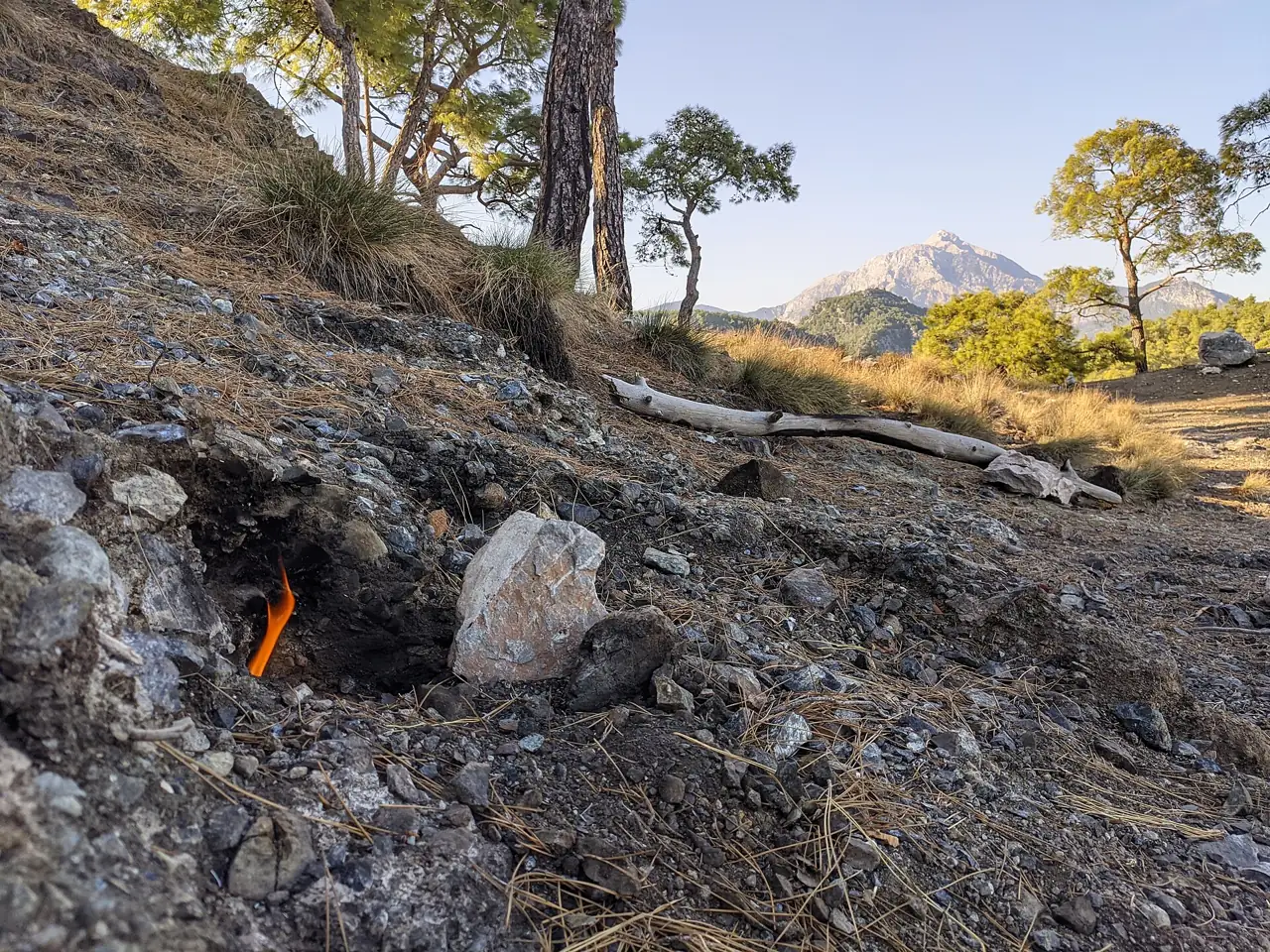
Diving, kayaking and quiet days
Dive centres in the bay run boats out to reefs and caves along this coast, including first dives in the sheltered water. Kayaks and paddleboards are rented on the beach, and walking up the shady stream bed behind the village is a cool way to spend a hot afternoon. Our activities guide covers what else is possible on this coast.
Where to stay and what the evenings are like
Small hotels rather than resorts
Accommodation here is family pensions, apartments and small boutique hotels, most of them with their own restaurant and many run by the same family for years. All-inclusive is almost unknown in the bay and there are no high-rise blocks. Rooms are limited, so July and August — and summer weekends, when Turkish families drive down from Antalya — book up early.
If you want a big pool complex, a kids' club or a waterpark, this is the wrong bay; Kemer and Belek do that far better.
Eating out
Restaurants line the back of the beach and the banks of the stream, several with tables over the water, and the menus are mostly fish, grills and mezes. Fish is normally sold by weight: ask the price per kilo and have your fish weighed in front of you before you agree, which is the single best way to avoid a surprise bill anywhere on this coast.
Evenings: honestly, there is no nightlife
A few bars play music late and some restaurants have live Turkish music in season, but there are no clubs, no bar street and no entertainment programme. By midnight the bay is dark and quiet apart from the stream and the cicadas. For most people who choose Adrasan that is exactly the point — but if you want a night out, you will be driving to Kemer.
Getting there and around
Adrasan is about 110 km from Antalya Airport, roughly 1 hour 50 minutes: the coast road past Kemer and Tekirova, then inland over the pass and down to the bay (Antalya Airport to Adrasan transfer, airport transfers).
Public transport is thin. Intercity buses along the main road stop at the Adrasan junction, from where a dolmuş or taxi covers the last few kilometres, and local minibuses run to Kumluca a handful of times a day — far less often out of season. Hire a car and the whole area opens up: Olympos, Finike, the Lycian Way trailheads. The road down into the bay is narrow and winding, so allow more time than the distance suggests (car hire, Finike transfers).
When to go
May, June, September and early October are the best weeks: warm sea, walkable hills and a bay that is busy but not full. July and August are hot and the small hotels are booked out. From November to March most pensions, restaurants and boats close, and while the bay is beautiful in winter you will need a car and should confirm in advance that your hotel is open. See weather by month and the coast in winter.
Frequently asked questions
How do I get to Adrasan from Antalya Airport?
It is about 110 km, roughly 1 hour 50 minutes by car, past Kemer and Tekirova and then over the pass. There is no direct bus, so most people book a transfer or hire a car; see Antalya Airport to Adrasan.
Is Adrasan beach sandy?
Partly. It is a mix of pebble and coarse sand, not fine sand, and in places it shelves quickly into deeper water. Water shoes make swimming more comfortable.
Is Adrasan good for families?
Yes, if you want quiet. The bay is sheltered and the water is usually calm, and the small hotels are used to children. What you will not find is kids' clubs, waterparks or entertainment, and the beach drops off steeply in some spots.
What is there to do in Adrasan in the evening?
Dinner by the water, a drink in one of a few bars, perhaps live Turkish music in high season. There is no nightlife in the resort sense: no clubs and no bar street.
Adrasan or Çıralı: which should I choose?
They are 20 to 30 minutes apart and both quiet. Çıralı has the protected turtle beach, the Olympos ruins and the Chimaera flames on its doorstep; Adrasan has the calmer, more sheltered bay and the Suluada boats. Walkers often stay in both.