©
Photo: Saffron Blaze, CC BY-SA 3.0, Wikimedia CommonsDemre, Kekova & Finike: Lycian history on the water
Between Olympos and Kaş the coast becomes the heartland of ancient Lycia. Demre has the famous rock-cut tombs of Myra and the church of St Nicholas, the original Santa Claus; offshore, the Kekova boat trip glides over ruins half sunk into a turquoise bay. Most people see it on a day trip, but it rewards a night or two.
Where to stay
Accommodation here is small-scale: pensions, village houses and a few hotels rather than resorts.
| Area | Character | Beach | Best for | From AYT |
|---|---|---|---|---|
| Finike | Orange-growing market town with a marina; practical base for Limyra and Arykanda | Long town beach of sand and pebbles | Sailors, independent travellers | 2 h 5 min |
| Demre | Busy agricultural town among greenhouses with Myra and the St Nicholas church | Çayağzı beach by ancient Andriake | Sightseeing on a budget | 2 h 30 min |
| Üçağız & Kaleköy (Kekova) | Fishing villages on the Kekova bay; Kaleköy is reachable only by boat or on foot | Swimming from rocks and jetties, very clear water | Romantic stays, sea kayaking, total quiet | 2 h 30 min |
Times are from Antalya Airport. Kaş is about 45 minutes west of Demre; see our Kaş guide.
Things to do
Myra
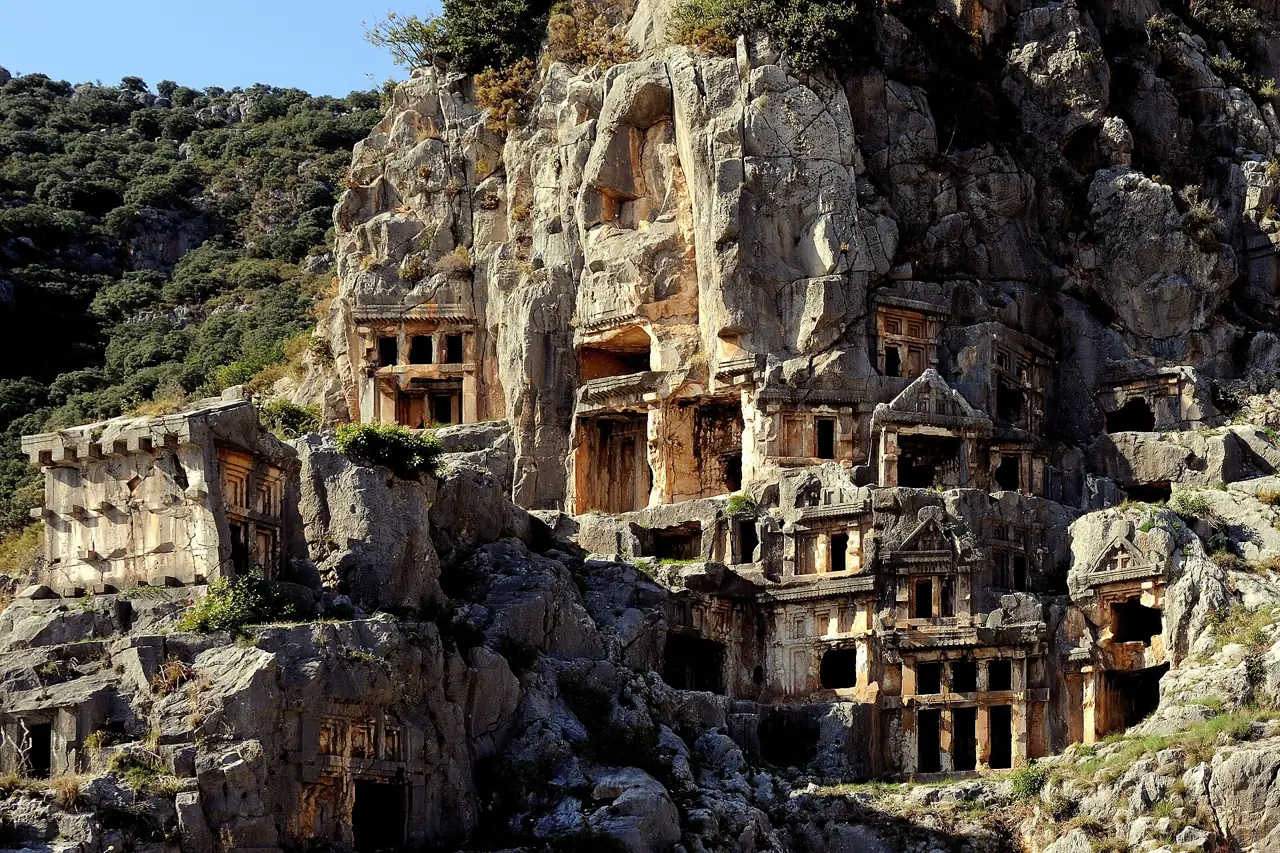
Just outside Demre, the cliff face above a Roman theatre is carved with dozens of Lycian house-shaped rock tombs, one of the most photographed sights in Türkiye. The theatre is well preserved and decorated with carved theatre masks. Go early; tour coaches arrive late morning.
Church of St Nicholas
Nicholas, the 4th-century bishop of Myra, is the saint behind Santa Claus. His Byzantine church in Demre has frescoes, mosaic floors and the sarcophagus long associated with him. Expect visitors from Russia and Greece in particular; it is a place of pilgrimage.
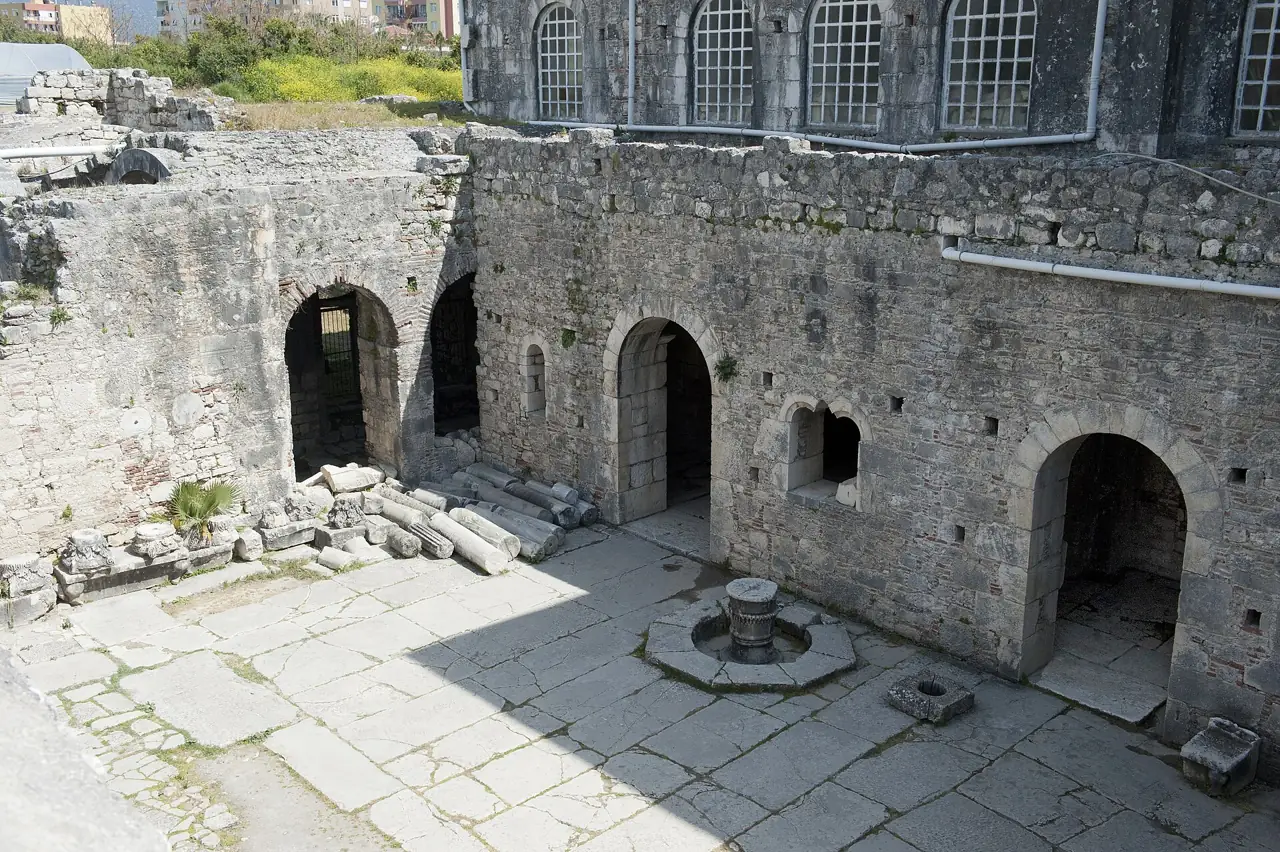
Kekova and the sunken city
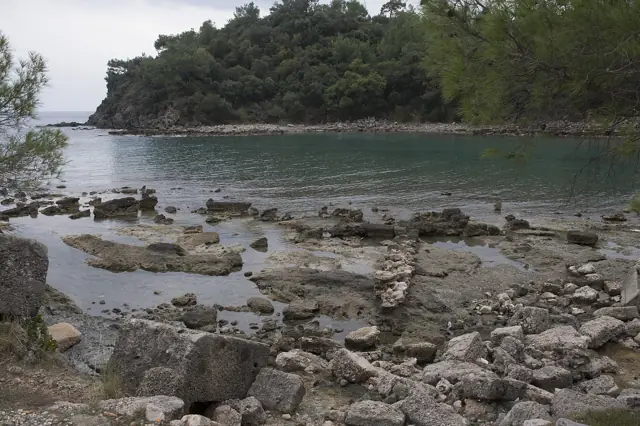
Boat trips from Üçağız (or from Kaş and Demre) cruise along Kekova island, where the foundations, stairs and walls of an ancient town lie just beneath the surface. Swimming over the sunken ruins is not allowed, but the boats stop in nearby bays. The trip usually ends at Kaleköy (Simena), with Lycian tombs in the water and a castle above the village.
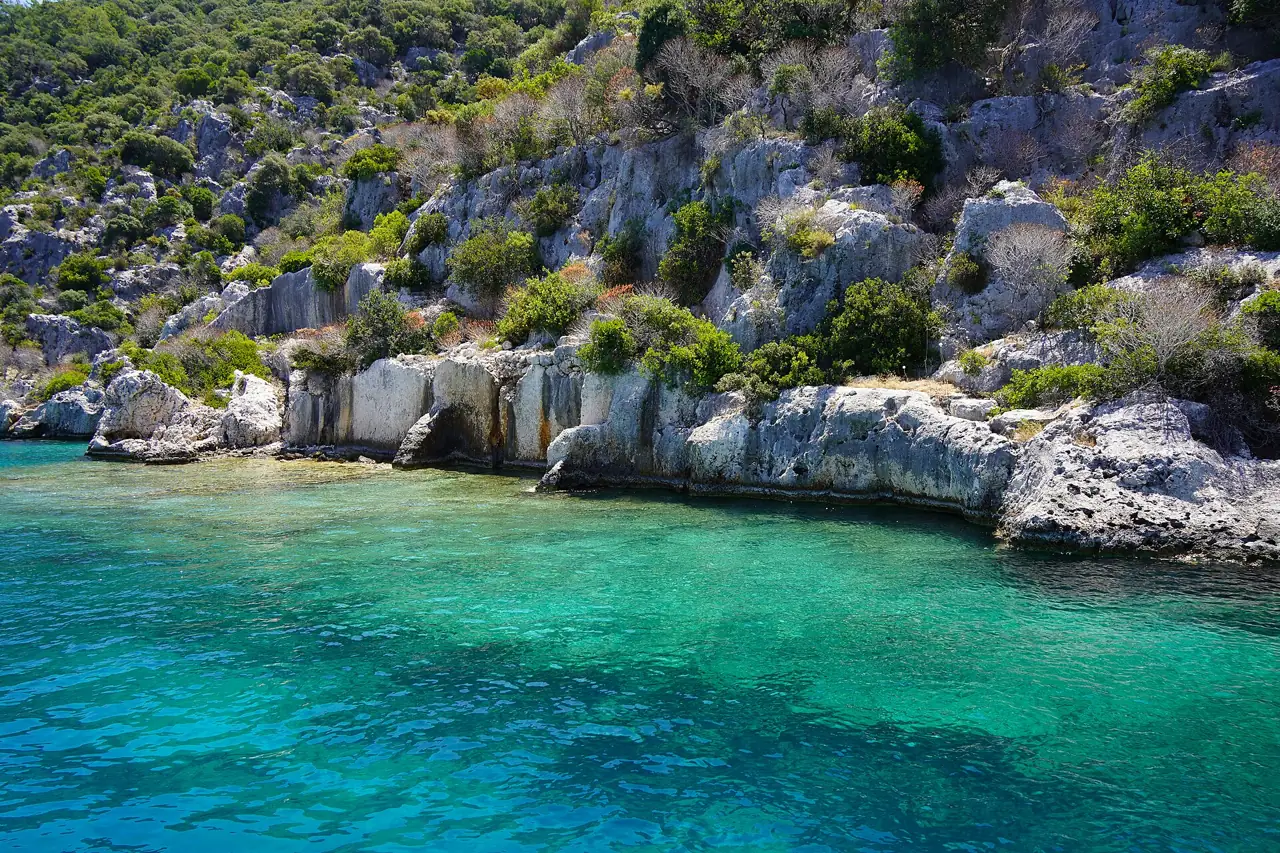
Sea kayaking
Kayak tours over the sunken city are the best way to see it closely and quietly. Half-day tours leave from Üçağız, often with a transfer from Kaş.
Andriake and the Lycian museum
Myra's ancient harbour at Çayağzı has a large Roman granary that now houses the Museum of Lycian Civilisations, a good introduction to the region, next to a sandy beach.
Limyra and Arykanda
Near Finike, Limyra has tombs and a theatre on a hillside above a river with turtles. Arykanda, an hour inland, is a terraced mountain city with one of the most spectacular settings of any ruin in Türkiye and very few visitors.
Doing it in a day: from where, in what order
Myra, St Nicholas and Kekova are usually seen in one day, and the day works or does not depending on where you start. From Kaş it is the easiest: about an hour to Üçağız, where the Kekova boats leave, and a little further to Demre. From Kalkan add half an hour, from Olympos or Çıralı a little more. From Antalya it is around two and a half hours each way on a curving coast road, which makes for a very long day; staying a night in Demre, Üçağız or Kaş turns it into a good one.
The order that works best is ruins first, boat after. Myra's theatre and tombs and the church of St Nicholas are both in or beside Demre and both are hard going in the middle of a summer day, so take them in the morning. The Kekova boats mostly leave Üçağız late morning and early afternoon and include swimming stops, which is exactly what you want by then.
Two practical notes. The sunken city is looked at, not swum over — the ruins themselves are a protected zone and boats pass slowly alongside; the swimming happens in bays nearby. And Kaleköy, the castle village above the water, has no road: you arrive by boat or on foot, which is part of why it still looks the way it does.
Getting there
From Antalya Airport it is about 150 km to Demre, around 2.5 hours via Kemer, Kumluca and Finike on a coastal road with many curves. Intercity buses between Antalya and Kaş stop in Finike and Demre. Many visitors instead base themselves in Kaş and come on a day trip; see our Kaş guide and day trips. Times and prices are in the Antalya Airport to Demre transfer guide.
When to go
April to June and September to October are best for sightseeing and kayaking. Boat trips run from spring to late autumn. Midday in July and August is very hot at Myra. Monthly figures in the weather guide.
Frequently asked questions
Can you swim over the sunken city of Kekova?
No, the sunken ruins are a protected archaeological zone. Boats and kayaks pass over them, and swimming is allowed in the nearby bays.
Is St Nicholas really buried in Demre?
His remains were taken to Bari in Italy in 1087. The church in Demre was his church as bishop of Myra and still holds the sarcophagus associated with him.
How do I get to Kaleköy?
Only by boat or on foot. Boats run from Üçağız in a few minutes; the Lycian Way also passes through.
Is Kekova a good day trip from Kaş?
Yes, it is the classic day trip from Kaş, by boat, by kayak tour, or by car to Üçağız and a short boat ride from there.
Is one day enough for Myra and Kekova?
Yes, if you start from Kaş or Kalkan: the ruins in the morning, the boat in the afternoon. From Antalya it is possible but means five hours of driving, so most people either stay overnight nearby or pick one of the two.
Where do the Kekova boats leave from?
Üçağız is the main departure point and the closest. Boats also run from Kaş and from Çayağzı near Demre, which take longer to reach the same water. Kayak tours leave from Üçağız too, usually with a transfer from Kaş included.