
©
Photo: Dreamchef, CC BY-SA 4.0, Wikimedia CommonsFood on the Turkish Riviera: what to eat, where and how
Many hotels on the Turkish Riviera are all-inclusive, and the buffet is easy. Yet some of the best meals of your holiday will happen outside it: Antalya piyaz with grilled köfte at a busy lunch counter, fresh fish at a harbour table, gözleme hot from the griddle at a weekly market or a long village breakfast in the hills. This guide covers what to eat on the coast between Antalya and Fethiye, where to find it, what to drink and the practical side: meal times, vegetarian options, allergies, tipping and paying.
What to eat
Antalya piyaz and şiş köfte
Antalya's own piyaz is not the onion-and-bean salad you find elsewhere in Turkey: white beans come dressed in a sauce of tahini, lemon and garlic, usually topped with tomato, parsley and boiled egg. Its classic partner is şiş köfte, minced meat grilled on skewers over charcoal and served with bread, grilled peppers and onions. Small köfte-and-piyaz restaurants are a lunchtime institution in Antalya and the towns around it.
Tandır: slow-cooked lamb
Tandır is lamb or goat cooked for hours in a pit or clay oven until the meat falls off the bone. It belongs to the villages inland, so you are most likely to find it at roadside restaurants on the way into the mountains or at the lunch stop of a day trip. Good tandır takes time, so it is often a midday dish and may be sold out by evening.
Gözleme: the market favourite
Gözleme is thin dough rolled out by hand, filled with cheese, spinach, potato or minced meat, folded and cooked on a large dome-shaped griddle. At the weekly markets women make it on the spot, and with a glass of ayran it is a cheap, filling lunch. Find the right day in our market days guide.
Fish and meze by the sea
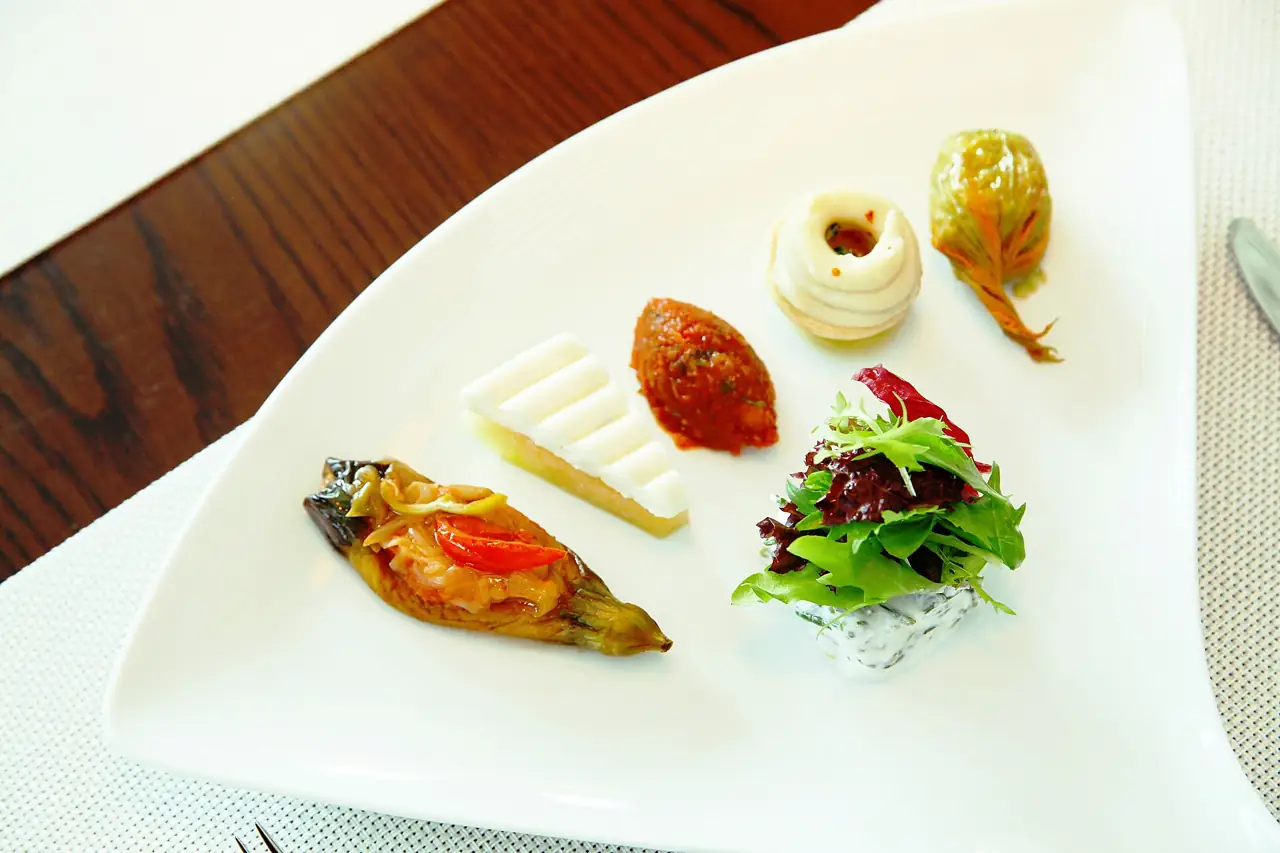
Along the coast the classic evening out is meze followed by grilled fish. Meze are small cold and hot starters: garlic yoghurt with herbs, aubergine dishes, sea beans in olive oil, stuffed vine leaves, fried squid. Sea bream (çipura) and sea bass (levrek) are available all year, mostly farmed; wild fish depend on the season and cost noticeably more.
Old-town cooking in Antalya and Alanya
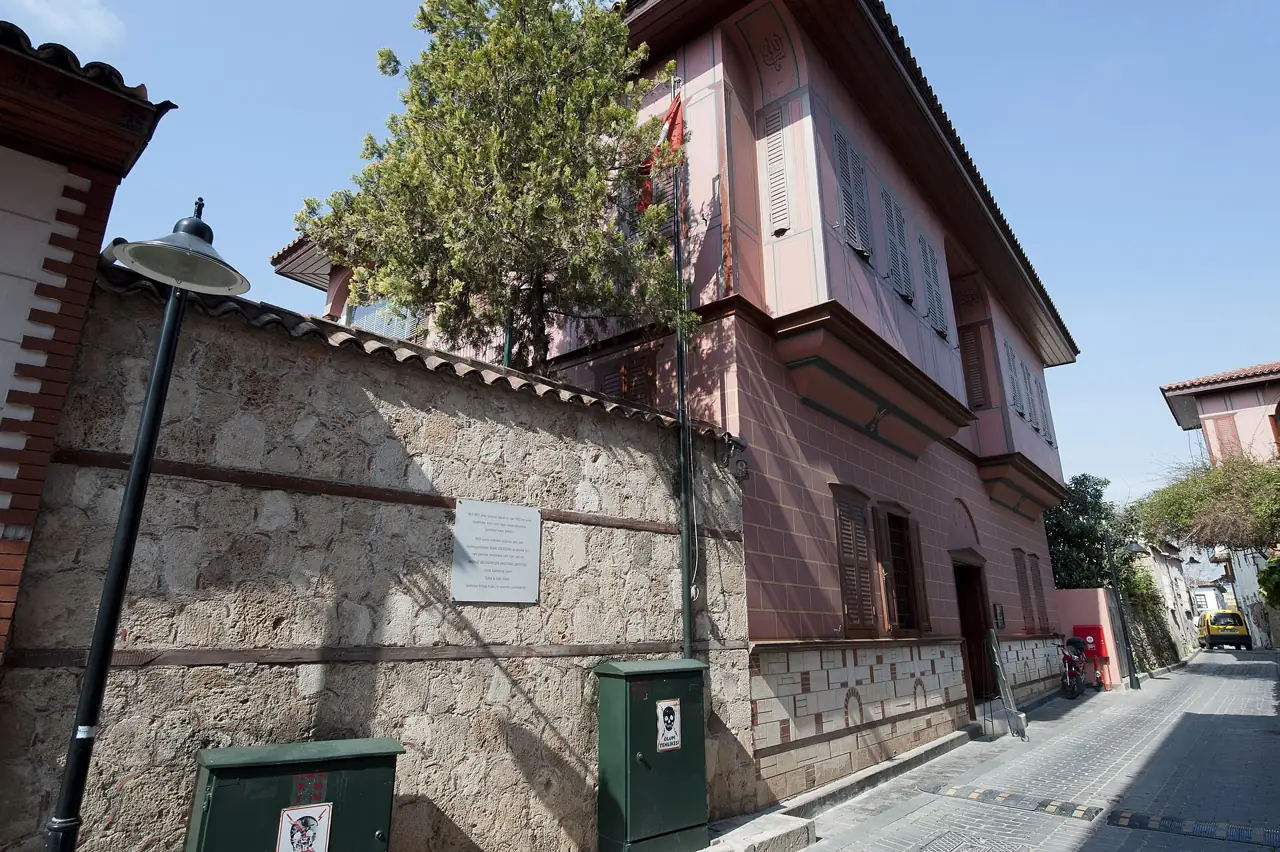
In Kaleiçi, Antalya's old town, and in the older streets of Alanya you will find home-style Turkish cooking: stuffed vegetables, stews, rice and bulgur pilaf and vegetables cooked in olive oil. A local speciality worth trying is hibeş, a spicy tahini dip with lemon and chilli, served as a meze. More in our Antalya city guide.
Trout from the Manavgat river
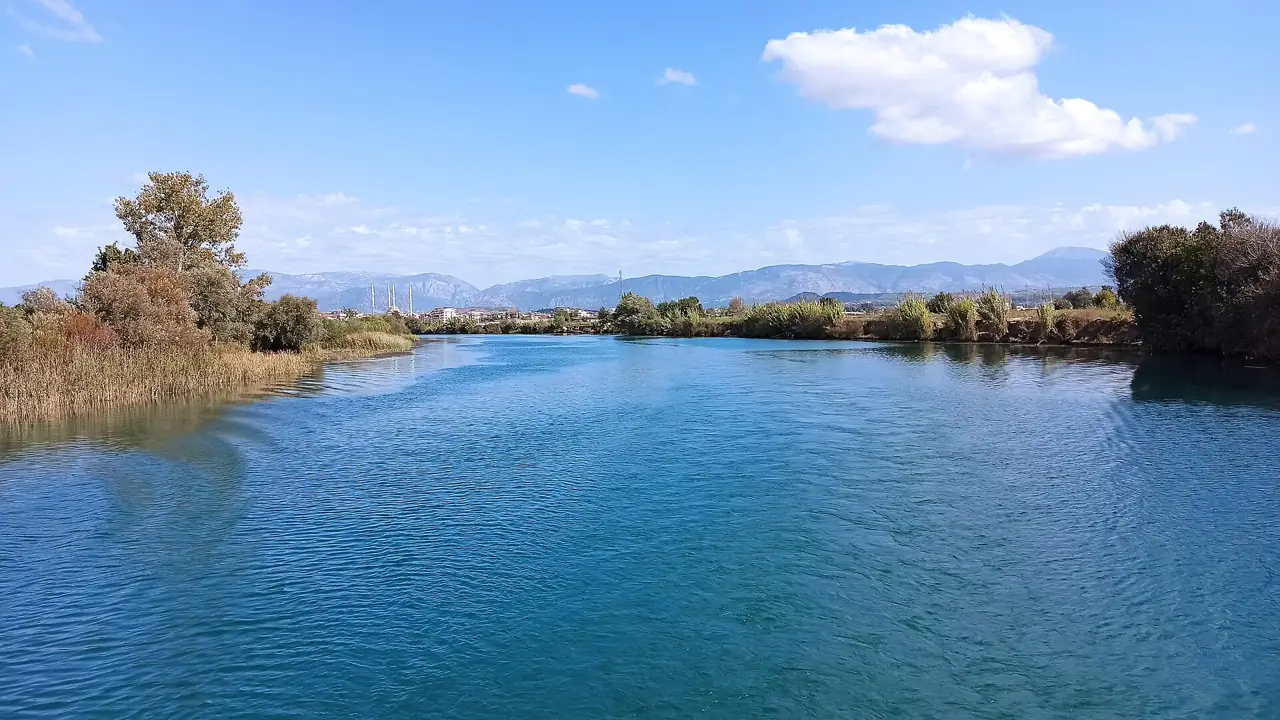
In the hills above Manavgat, cold mountain water feeds trout farms, and restaurants along the river serve trout (alabalık), usually grilled or pan-fried. It is a popular lunch on boat trips and excursions along the Manavgat river and in the canyons inland. See our Manavgat guide.
Fethiye fish market
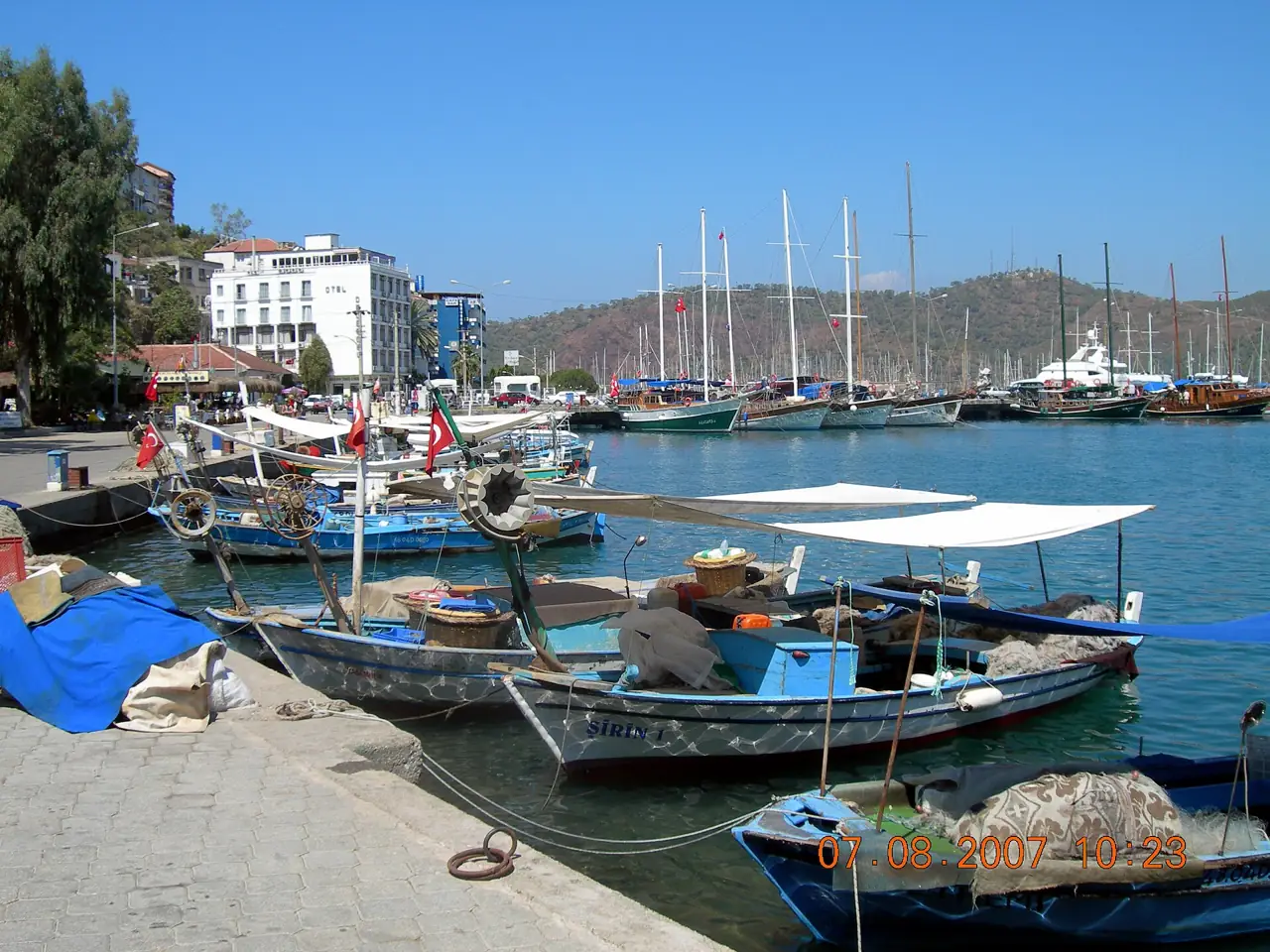
Fethiye's fish market works in its own way: you choose fresh fish at one of the stalls in the middle and pay by weight, then one of the restaurants around the square cooks it for you for a fee per person, usually with salad and bread. Drinks and meze are extra, so agree on the cooking fee before you sit down. More in our Fethiye guide.
Village breakfast
A köy kahvaltısı (village breakfast) is a weekend ritual for Turkish families: small plates of cheese, olives, tomatoes and cucumber, honey, jams, butter, eggs cooked in a pan (menemen, or with spicy sausage), warm flatbread and endless tea. Garden restaurants and mountain villages inland serve it all morning. Plan a slow, late breakfast rather than a quick bite.
Desserts: baklava, künefe and dondurma
Baklava, thin layers of pastry with pistachio or walnut in syrup, is sold everywhere. Künefe is shredded pastry baked with soft unsalted cheese, soaked in syrup and eaten hot. Turkish ice cream, dondurma, is dense and slightly chewy, and street vendors like to turn handing it over into a little show.
Citrus, pomegranate and tahini-pekmez
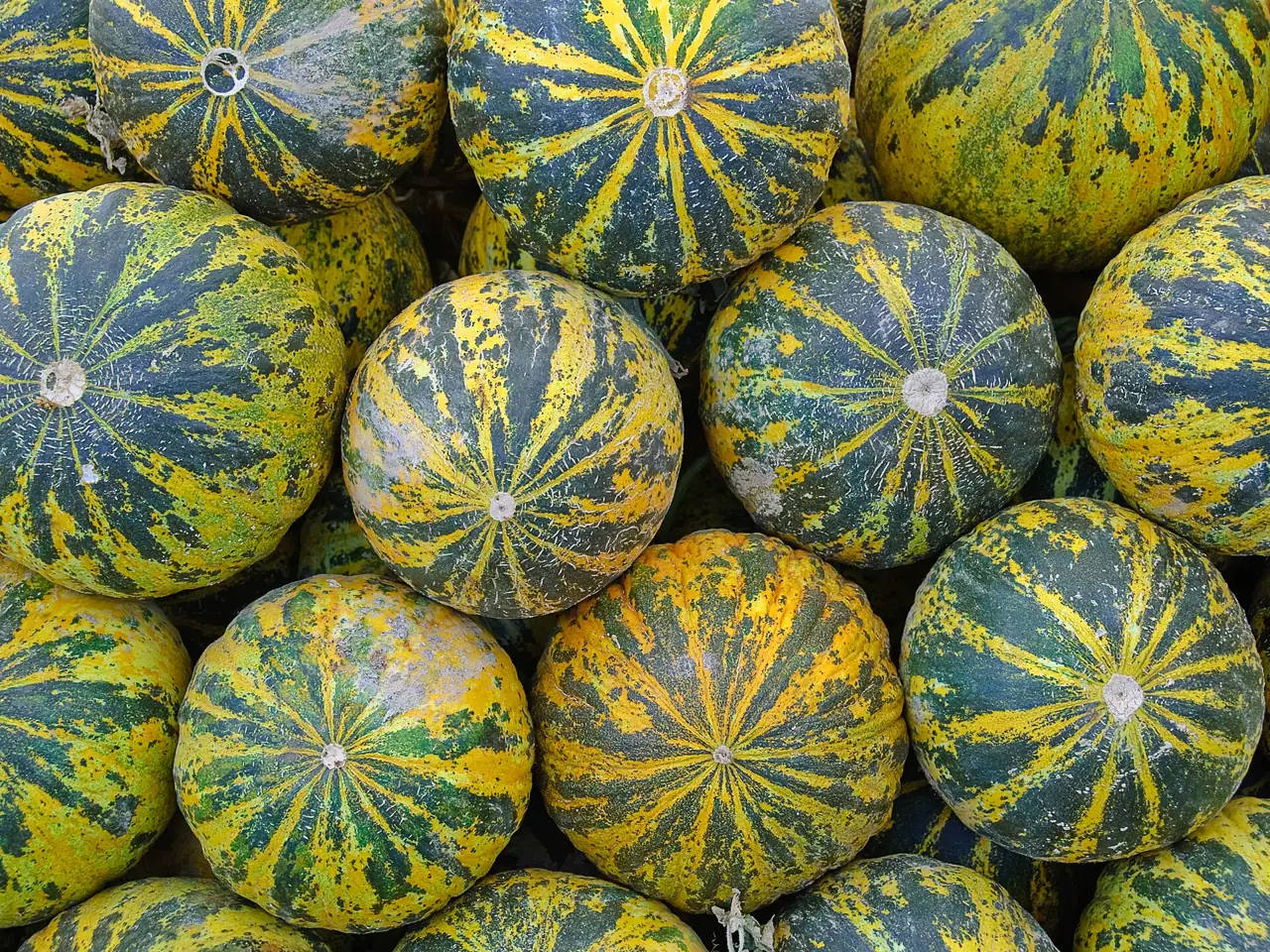
The Antalya region grows a lot of citrus: in winter and spring oranges, mandarins and lemons are sold at roadside stalls, and Finike is known for its oranges. In autumn pomegranates are everywhere, fresh, as juice and as sour pomegranate molasses on salads. Tahin-pekmez, tahini mixed with grape molasses and spread on bread, is a classic breakfast and a good thing to take home.
Where to eat
Lokanta: home-style cooking
A lokanta (or esnaf lokantası, "tradesmen's restaurant") serves dishes cooked that morning and kept warm at the counter: soups, stews, beans, vegetables in olive oil, rice. You simply point at what you want. Portions are generous and prices low; lunchtime is the best time to go, as popular dishes run out.
Kebapçı and pide
A kebapçı grills meat over charcoal: adana and urfa kebab, şiş, köfte, chicken wings. Many also bake pide, Turkish flatbread with toppings, and lahmacun in a stone oven. They are relaxed, family-friendly and good value.
Meyhane and meze restaurants
A meyhane is made for a long evening: plenty of meze, then fish or meat, usually with rakı. Order a few meze at a time rather than everything at once; waiters often bring a tray to choose from. If something is not on the printed menu, ask the price before you accept it.
Harbour fish restaurants
In harbour restaurants fish is often priced by the kilo. Choose your fish from the display and ask for the price per kilo and the approximate weight before it is cooked; this avoids surprises on the bill. Farmed sea bream and sea bass are usually the best value.
Markets
The weekly markets are good for cheap eating: gözleme, fresh fruit, olives, cheese, nuts and dried fruit. Bring cash in small notes. Days and places: market days.
How to avoid tourist traps
Be wary of restaurants with large photo menus in five languages, touts calling you in from the street and no Turkish guests inside. A simple rule: eat where locals eat, a street or two back from the promenade, and make sure prices are on the menu.
Check the bill. Some places add a service charge (servis ücreti) or charge for bread and starters brought to the table without asking. If something appears that you did not order, ask politely; it is usually taken off.
Drinks
Tea and Turkish coffee
Çay, black tea in small tulip-shaped glasses, is drunk all day and often offered in shops as a gesture of hospitality. Turkish coffee is boiled in a small pot and served with the grounds: order it sade (no sugar), orta (medium) or şekerli (sweet), and let the grounds settle before you drink.
Ayran and şalgam
Ayran is a cold, lightly salted yoghurt drink and the natural partner of kebab and gözleme. Şalgam is a sour, deep red fermented drink made from purple carrot and turnip, served with kebab; ask for it acılı (spicy) or acısız (mild). It is an acquired taste, but worth one try.
Fresh juice
Stalls and cafés press fresh orange juice all year and pomegranate juice in season, right in front of you. Pomegranate juice is pleasantly tart.
Rakı and local wine
Rakı, the aniseed spirit, is the classic drink with meze and fish. It is mixed with water, turns milky white and is sipped slowly with food. Turkey also makes wine, including from its own grape varieties, and most restaurants have a few bottles. Alcohol is heavily taxed, so drinks can raise a bill more than the food does.
Water
Locals mostly drink bottled water rather than tap water, and visitors should do the same. It is cheap and sold everywhere.
Practical tips
Meal times
Breakfast is usually eaten between about 8 and 10 (later at weekends), lunch between noon and 2 pm, dinner from around 7 pm; in summer restaurants stay busy until late. Lokantas cook in the morning and serve until the food runs out.
Vegetarian options
Vegetarians eat well here: meze, salads, zeytinyağlı dishes (vegetables cooked in olive oil and served at room temperature), lentil soup, gözleme with cheese or spinach, pide with cheese and egg. Watch out for hidden meat: some soups and pilafs are made with meat stock, and beans or stuffed peppers can be cooked with mince. Ask "etli mi?" (does it contain meat?). Vegan eating is harder because of yoghurt, cheese and butter.
Allergies
Nuts are common in desserts, especially pistachio and walnut in baklava and künefe, and turn up in some meze and salads. Sesame is in tahini, piyaz and simit. If you have a serious allergy, carry a written note in Turkish and ask before you order.
Tipping
Tipping is not compulsory, but in restaurants roughly 5–10% is usual if you were happy and no service charge has been added. In cafés and for small bills, rounding up is fine.
Card or cash
Cards are accepted in most restaurants in the resorts and cities; in small places, ask before you order. Cash in Turkish lira is handy at markets, small lokantas, gözleme stalls and village restaurants. Pay in lira rather than euros, as euro prices are often rounded in the restaurant's favour. For a rough idea of daily costs, try our holiday budget calculator.
Ramadan
During Ramadan many Turks fast from dawn to sunset, but in tourist areas restaurants stay open during the day and visitors eat and drink as usual. At sunset some restaurants serve a special iftar menu and tables fill up quickly. Ramadan moves about 11 days earlier each year, so check the dates for your trip.
Frequently asked questions
What is Antalya famous for, food-wise?
Antalya's best-known local dishes are piyaz with a tahini dressing, usually eaten with şiş köfte, and hibeş, a spicy tahini dip. The region is also known for citrus, pomegranates and tahini with grape molasses. On the coast, fish and meze are the classic evening meal; around Manavgat it is river trout. See our Manavgat guide.
Is street food safe?
Generally yes, with common sense: choose busy stalls where food is cooked fresh in front of you, such as gözleme, simit, grilled corn or fresh juice. Be more careful with stuffed mussels and anything that has been standing in the sun, and drink bottled water.
How much does a meal cost?
It depends far more on where you eat than on what you eat. A lokanta, köfte restaurant or gözleme stall is cheap; a harbour fish restaurant or a promenade terrace with a view costs several times as much, and alcohol pushes the bill up further. For a rough daily figure, try our holiday budget calculator.
Is it easy to eat vegetarian?
Yes. Meze, salads, vegetables cooked in olive oil (zeytinyağlı), lentil soup, gözleme and cheese pide are everywhere. Ask whether soups or pilaf are made with meat stock. Vegan eating is harder because many dishes use yoghurt, cheese or butter.
Where can I have the best local breakfast?
For a full village breakfast (köy kahvaltısı), head to garden restaurants and mountain villages inland, ideally combined with one of our day trips; weekends are busiest. In town, simit, cheese, olives and tea, or a gözleme on market day, make an easy local breakfast.